Architecture Is On The Hook For GenAI Success
Enterprise architecture has always existed to absorb complexity. But generative AI is testing that mandate in ways we haven’t seen before.
Every day brings a flood of new models, tools, agents, claims, and counterclaims. Architects are expected to understand foundation models and retrieval architectures, advise on pilots, arbitrate platform decisions, and weigh emerging risks — often while the organization is already experimenting without them. Many EA teams tell us they feel simultaneously essential and behind.
This sense of overload is not a failure of architecture. It’s a signal that the nature of architecture itself is changing.
In our recent research, GenAI Is Overwhelming Enterprise Architecture, we examined how generative AI is reshaping the role, scope, and operating model of EA, drawing on client conversations, award submissions, and what we see inside enterprises trying to scale beyond pilots. The conclusion is straightforward: GenAI doesn’t just add new technologies to the landscape. It increases architectural entropy unless deliberately integrated, governed, and continuously steered.
Many organizations began their genAI journey with enthusiasm. Proofs of concept proliferated. Chatbots appeared everywhere. Some worked — at least initially. Then the second‑order effects arrived. Pilots stalled. Inference costs spiked unpredictably. Output quality degraded. Agentic systems crossed implicit authority boundaries, triggering organizational backlash. What looked like a promising demo became fragile in sustained use.
The lesson is not to slow down experimentation. It’s to recognize that genAI success is less about velocity and more about architecture with feedback. Systems that learn, adapt, and act probabilistically cannot be governed by static reviews or one‑time design decisions. Without explicit feedback loops — technical, economic, and organizational — AI‑enabled systems will drift.
This is why enterprise architecture keeps getting pulled into genAI decisions even when initiatives start elsewhere. When fragmentation, duplication, and unmanaged risk emerge, organizations turn to EA to restore coherence. At the same time, genAI accelerates a shift that was already underway: away from static architecture artifacts and toward living systems of knowledge. Diagrams and standards age too quickly in environments where models change and agents recombine capabilities dynamically. Architecture increasingly exists to support continuous sense-making, not episodic review.
Agentic AI raises the governance bar without resolving the confusion. Some teams assume autonomy without defining it; others fear it without operational criteria. As systems gain the ability to act — committing spend, routing work, engaging customers — decision rights, accountability, and escalation paths can no longer be implicit. They must be designed. This is not an argument for centralized control or innovation theater but for intentional operating models that make autonomy safe and scalable.
What The Chief Enterprise Architect Must Do Next
For EA leaders, this moment demands focus rather than breadth:
- Shift EA from documents to systems. Invest in architecture knowledge that can be queried, recombined, and updated dynamically as AI capabilities evolve. I am already talking to multiple clients who are using AI to ingest signal from DevOps and AIOps pipelines into common IT management graphs and compare it to architecture decision records, looking for drift and risk.
- Define guardrails for agentic behavior early. Be explicit about where autonomy is permitted, how it is constrained, and how humans intervene when systems behave unexpectedly.
- Anchor genAI decisions in operating model clarity. Clarify where AI capabilities live, how they’re funded, how costs are governed, and how standards are enforced across teams. This gets into the EA as IT4IT/operating model consultant pattern, which we are seeing more and more.
- Ontology and semantics are heading for far more than “15 minutes of fame” — more like five years. GenAI makes “meaning” an operational dependency: If your enterprise can’t consistently represent what a thing is (and where it’s authoritative), your RAG grounding, agent behavior, and cross‑use‑case reuse will fragment fast. That’s why we’re seeing renewed pull toward knowledge graphs and semantic standards — not as academic purity but as the only scalable way to align context, provenance, and reuse across dozens (soon hundreds) of AI-enabled workflows.
- Make feedback loops nonnegotiable. Treat sensing, evaluation, and adjustment as first‑class architectural requirements for any AI‑enabled system — not after‑the‑fact governance. If an AI‑enabled system cannot sense outcomes, evaluate performance, and adjust — technically and organizationally — it is incomplete by design. In a world of probabilistic systems, architecture without feedback isn’t just outdated; it’s a liability.
- Get architects back into the act of building. GenAI dramatically lowers the barrier to hands‑on architectural experimentation — getting you into the “fun parts” nearly instantly — and removes the last excuse for ivory‑tower architecture.
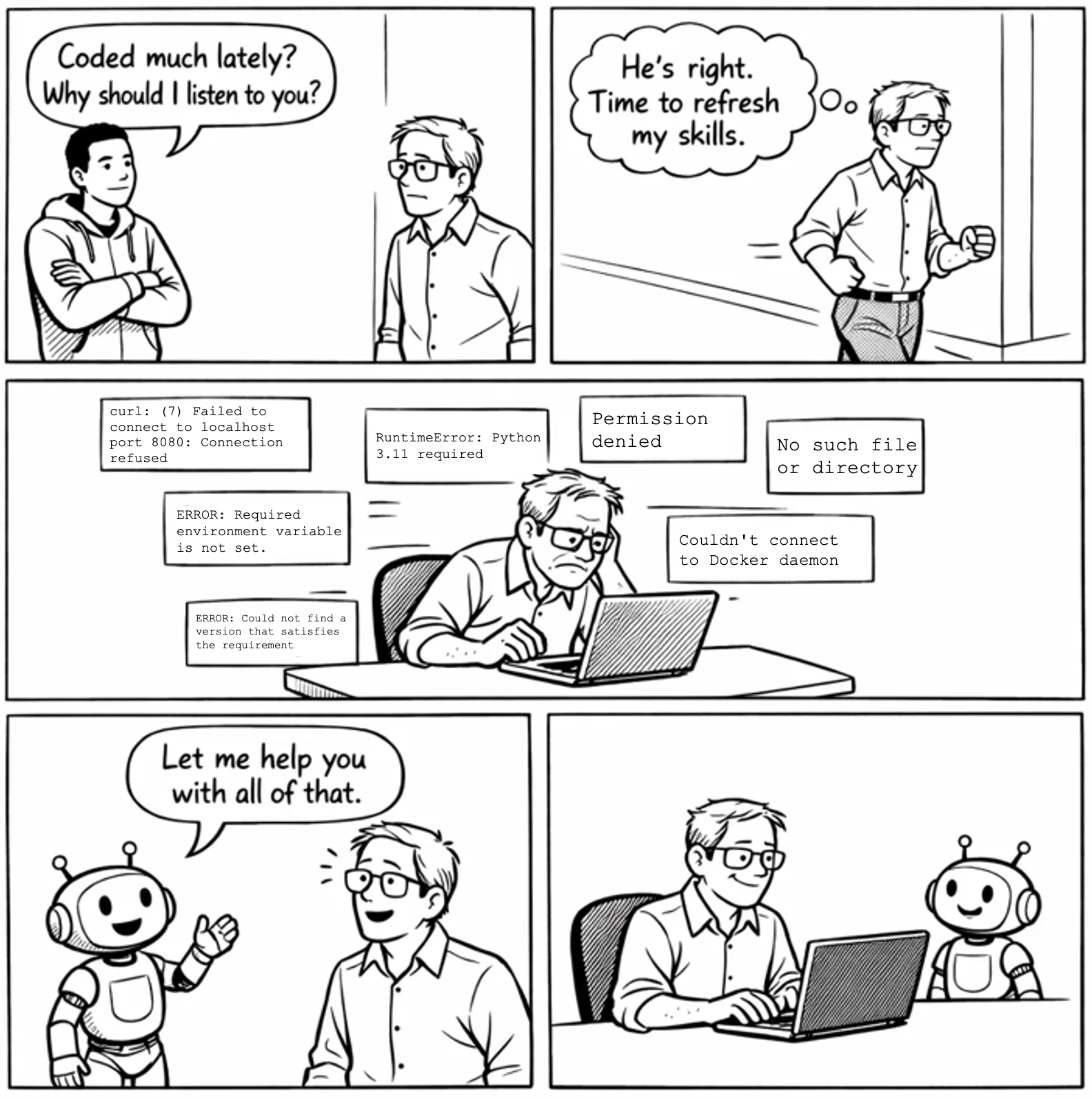
That last point matters more than it might appear. One of the quiet revolutions of genAI is how effectively it helps architects reengage with implementation. Tools can now coach, scaffold, and correct in real time, turning rusty skills into working prototypes far faster than traditional training ever could. The result is not that architects become full‑time developers again but that architectural judgment becomes grounded in lived system behavior rather than abstract debate. If I can do it as an analyst, you can do it as a working architect.
Enterprise architecture has navigated major technology shifts before. GenAI may be the most disruptive yet — not because it replaces architecture but because it makes architecture unmistakably accountable for success.
Interested in this topic? Engage with me via inquiry/guidance sessions by emailing inquiry@forrester.com.
Categories