Stop Value Erosion With Value‑Aligned Metrics
Value-aligned metrics are like a jazz band agreeing on the harmony. What happens if they don’t? Imagine you’re in a late-night jazz club. A trio settles into a smooth groove. Then the sax takes off in one direction while the bassist heads in another. The drummer adjusts, trying to pull it together. The room feels it instantly: Something’s off. They don’t follow the same harmonic structure and don’t listen closely enough to each other. Many organizations face this same challenge: There’s talented players and good intentions, but functions, teams, and external partners aren’t aligned and miss each other’s cues — eroding value potential.
Our latest report, Design Metrics That Boost Organizational Alignment, shows why even organizations who use frameworks such as OKRs struggle with alignment. To solve this problem, we’ve introduced a way to design, track, and act on value-aligned metrics. Forrester defines value-aligned measurement as:
Codesign and operationalize a system of metrics that aligns contributions of teams and partners to customer journeys and value streams, driving shared value for customers and the business.
Current Metrics Drive Misalignment
Misalignment rarely happens because someone is doing the wrong thing. It happens because every contributor, inside and outside the organization, is guided by a different understanding of what success looks like. Misalignment occurs when companies use metrics that:
- Lack a shared understanding of value. When teams assume different things about what customers value, they optimize for different outcomes: speed here, personal guidance there, ease somewhere else. Each choice is rational on its own, but without a shared definition of value, the collective result never lands.
- Ignore external contributors to value. Most metrics track only internal work. They miss the partners, intermediaries, and customers who shape the outcome just as much. Even if every internal step looks right, the experience will still feel off when the wider context is invisible.
- Cascade goals by function. When goals roll down by department instead of by customer journey or value stream, each function tunes its own part. The result isn’t coherence — it’s parallel performances that customers experience as fragmentation.
- Include low‑rigor metrics. Teams default to familiar or popular metrics instead of defining the real question they need to answer. The metric sounds credible, but it’s mismatched to the moment — and too blurry to guide meaningful decisions.
- Focus too much on targets. Hitting targets becomes the goal. People play it safe, avoid mistakes, and slow progress — compliance replaces value creation.
Value-Aligned Measurement Is Key To Value Optimization
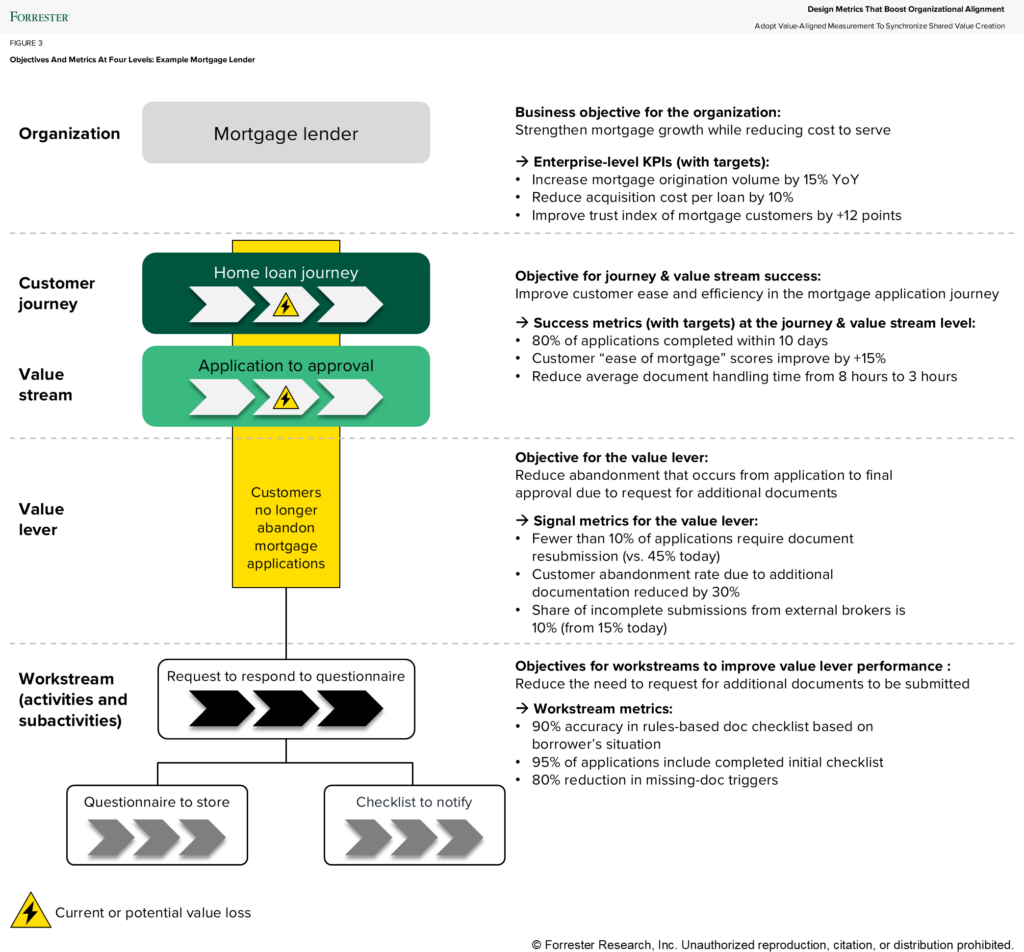
Value-aligned measurement is like agreeing on the harmony before improvising: It preserves autonomy but enables and encourages collaboration. A value-aligned approach organizes measurement into four connected levels that support one another:
- Strategic metrics measure performance on organizational goals and give direction.
- Success metrics track whether key journeys and value streams are contributing to strategic goals.
- Signal metrics are the early cues that success is drifting in journey and value streams and help focus interventions.
- Workstream metrics track the evidence that interventions are working and help involved teams align the work they do to make those interventions successful.
How To Make Value-Aligned Measurement Real
- Secure executive commitment by showing how alignment strengthens growth, loyalty, and efficiency.
- Build out the four levels with discipline: Map journeys, identify all contributors, understand value levers, and design (not brainstorm!) metrics that reflect real outcomes.
- Build governance that functions like a good bandleader, listening for drift and realigning contributors.
- Integrate tools such as journey management, process mining, and value-stream analytics to surface bottlenecks and connect actions to impact.
Do you want to lead the charge to value optimization? Read the full report to access these insights and best practices in greater detail. Forrester clients can request a guidance session with us to learn more.
Categories