Infosys Americas Confluence 2026: An AI Transformation Trip Report
We attended Infosys’ Confluence event in Washington, DC at the historic Omni Shoreham Hotel, the hotel the Beatles stayed in before their first live US performance. John Lennon’s handwritten setlist hangs in the lobby (see the pic below). Over the course of two days, we met with Infosys and enterprise leaders talking about AI transformation. Here are experiences from enterprise speakers that caught our imagination and what they mean for technology execs:
- “If the AI architecture assumes the model is smart, it’s the wrong architecture” — Larry Bowden, lead architect, Woodside Energy. This was the cleverest technical thing we heard at the event. The architecture (and especially the harness and control plane) must overcome the flaws and failure of any language model used in a deployment. Just as redundancy is part of any industrialized process, including software applications, model output exception handling and correction is part of any AI application. The harness has to deal with model routing, model drift, incorrect results, and observability support for the people operating the machinery of AI apps.
- “Operations owns the workflow; IT owns the platform; the harness connects the two” — Bowden. Larry went on to make the most interesting organizational point we heard. Most people we spoke with know that IT can’t own AI success, that operational leaders are vital. But this architectural observation connects what the ops leader cares about — speed, accuracy, cost optimization — to the technical infrastructure needed to deliver it. This separation of responsibilities is missing from many enterprises that still treat AI as a technology challenge for IT to solve rather than as an opportunity to transform its business and its customer value proposition.
- “People are upset when we run out of tokens” — CIO, International Finance Corporation. This came about as the CIO described a situation when the monthly token budget was exhausted, leaving employees frustrated with inert AI tools. There was universal agreement that “it’s hard to measure personal productivity improvements [but] don’t take away my tokens.” Instead, plan for them. The CIO went on to say that, as CIO, she’d be happy to charge the department using the tokens (though she also indicated that IFC’s not quite ready for that yet). We believe that the best way to scale AI is in fact by asking operations leaders to fund the ongoing inferencing costs. In fact, we think it’s time to create a general ledger line item to budget, track, and optimize variable AI operating costs, including tokens. After all, we have a line item for electricity and the phone, so why not tokens?
- “At the idea stage, the project needs a business sponsor, data that’s ready, and a business case” — Head of enterprise AI, GE Vernova. Moving AI apps from pilot to production is hard. He went on to say that “by shifting these things left, we have a 95% success rate deploying AI apps.” That’s a remarkable track record but one you might expect if in fact business, operations, and IT leaders work together on AI applications. The requirements will evolve, but at least the team is set up to reinvent the workflow and accept the costs of running the old process and the new process in parallel while working out the kinks before cutting over to the new process.
- “Most reinvented processes we see are in finance operations” — Infosys employee. Infosys reports that 8% of its calendar Q3 2026 revenues were for AI projects and that it has implemented AI applications for 38 customers. To help with all this, Infosys has created Topaz Fabric, an AI-powered delivery platform for coding, process reinvention, and other tech tasks. After seeing a demo, we were curious what processes Infosys customers are reinventing. The most common agentic reinvention today comes in “finance operations.” The logic is this: 1) CFOs care about streamlining finance operations, so it’s a good place to test out the ROI of AI; 2) finance operations has many repeatable tasks — invoice reconciliation and financial reporting among them — that can be sped up using AI tools; and 3) finance has clear metrics for the existing processes, so it’s easier to do a before-and-after analysis. The trick will be pulling lessons from these initiatives to apply them to other initiatives.
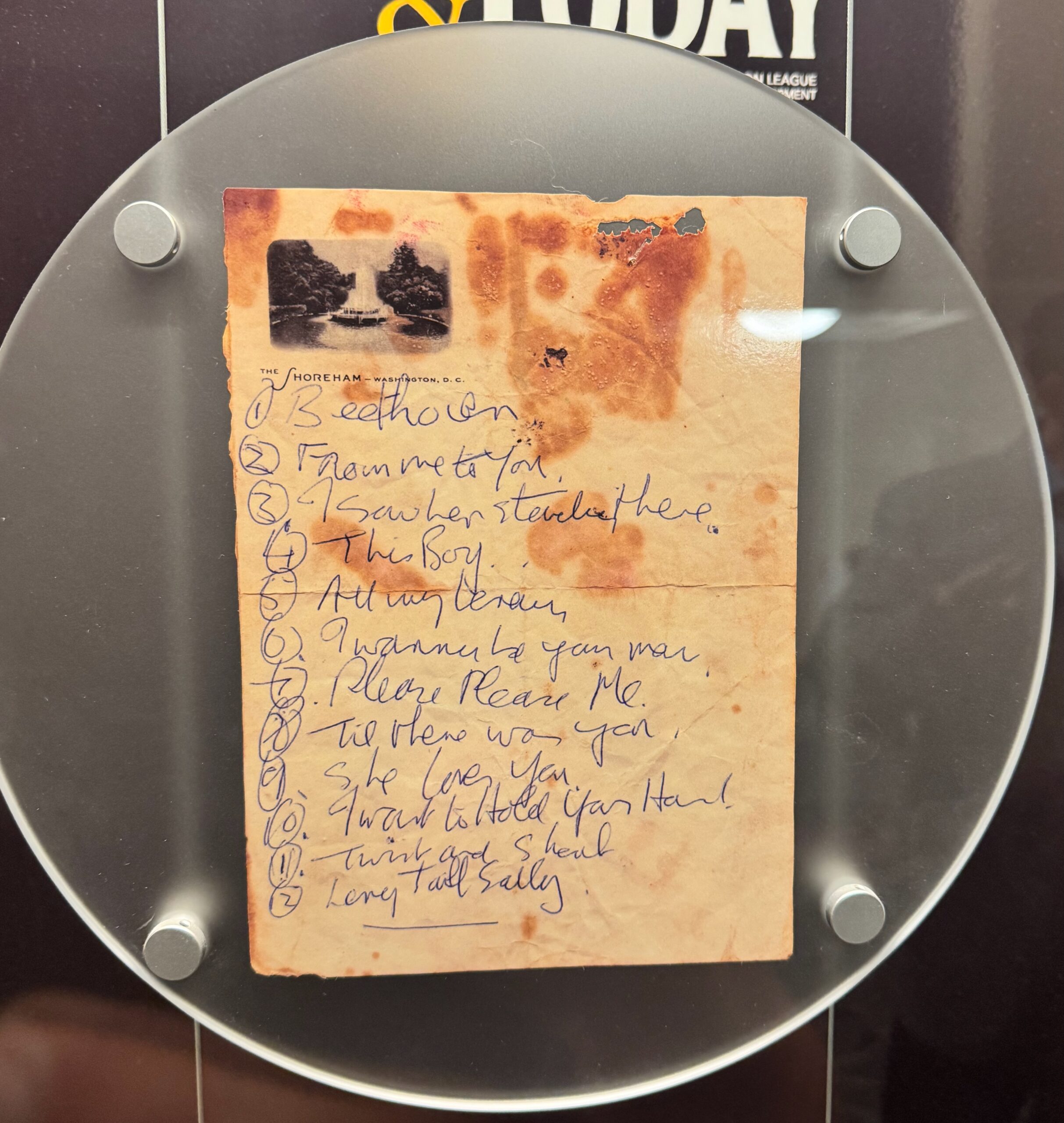
John Lennon’s setlist from February 1964, displayed in the lobby of the Omni Shoreham Hotel, Washington, DC
Categories