Make Customer Obsession Machine Readable
My bread is flat. Again.
Every week my online grocery delivery shows up. Every week I return something fragile, like fruit, bread, or crisps (that’s potato chips to you) because a packing robot in the dark warehouse decided to put a five kilo bag of cat litter, or a ten pack of beer on top of the bread. Every week, I get a refund, which is all very customer obsessed. Thank you very much.
But I wanted the bread.
So why is the packing robot making the decision to pack square heavy objects on top of round squishy objects? Why doesn’t the weekly trend of refunding the cost of flattened bread show up as something broken in the warehouse process?
The packing robot most likely isn’t AI powered. It’s most likely following an algorithm. Somebody decided on the packing order. A business analyst or a developer maybe, optimizing the warehouse operations for efficiency, or the shipping crates to fit into the least number of delivery vans.
Not optimized for reducing the cost of returns.
Not optimized for keeping my bread intact.
Not optimized for me, the customer.
This is a drop in the ocean of what we face as we increasingly empower not deterministic algorithms but probabilistic agents to make seemingly minor, but also customer-impacting business decisions.
Make customer obsession machine-readable
Customer obsession can no longer live only in PowerPoint decks, journey maps, design principles, and the heads of experienced employees. If an AI system is making or shaping a customer-impacting decision, it needs those principles in a form it can actually use.
As a CX leader in an increasingly AI-powered enterprise, you need to ensure that every machine that shapes customer outcomes understands what customer value means, what context matters, what good looks like, and when a human must take over. That means turning customer strategy, journey context, experience standards, trust requirements, and trade-offs into governed decision infrastructure. You can’t be vague. You need to structure guidance in a way that is machine addressable, semantically defined, versioned, available at the moment of decision, traceable to an accountable owner, and testable against expected behavior.
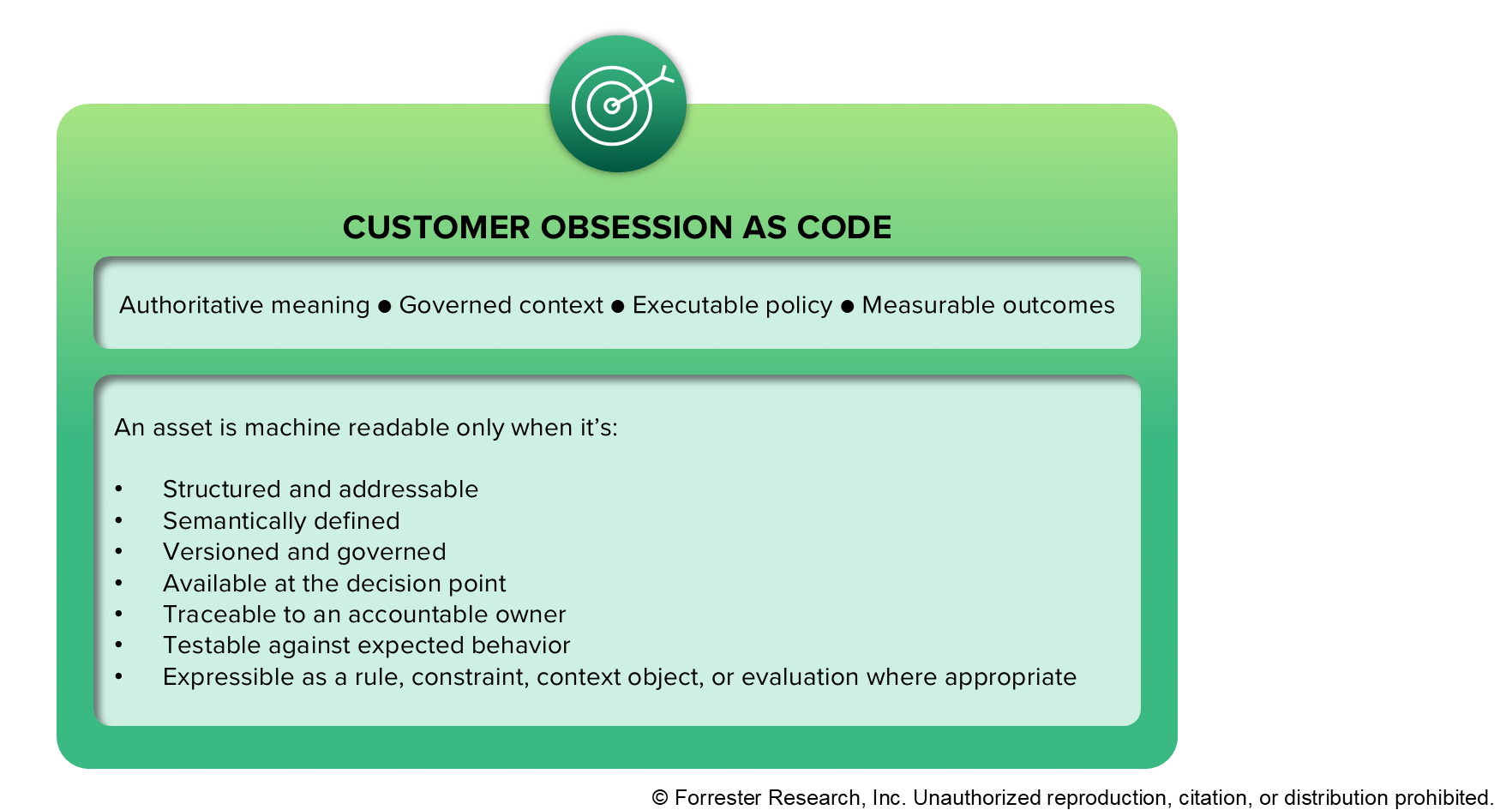
In practical terms, the warehouse agent shouldn’t merely know how to maximize crate utilization or minimize delivery miles. It should understand that bread is fragile, that repeated refunds signal a broken experience rather than a successful recovery process, and that some efficiency gains destroy customer value. It should know what it may optimize, what it must protect, and when a human needs to intervene.
This is the emerging mandate for the AI Chief Customer Officer
AI will not make your organization customer obsessed by itself. Unchecked, it will scale today’s lack of customer obsession at machine speed. This doesn’t mean that CX leaders need to own every enterprise agent. But they must own the customer context and design and service principles those agents use, and create a shared decision context that customer service, technology, operations, risk teams, people, and machines can apply consistently.
Read our new report, The AI Chief Customer Officer: Make Customer Obsession Machine-Readable, to learn how CX leaders can build customer obsession into the decisions AI makes.
Categories