Developer Relations Is Not (Just) Marketing
If you’ve got a product that’s aimed at developers but consider developer relations as solely a marketing function, you’re making a mistake. You might find:
- Competitors appear to have insights that your marketing team misses.
- Your products lack key features compared to others on the market while you spend time building things that your metrics later tell you nobody uses.
- Negotiations with a client start off well, but you find yourself ghosted after a few weeks.
Developer Relations Builds Your Developer Credibility
Developer relations (DevRel) has many titles, but it’s the part of your organization that connects it with software developers outside the organization. That’s different from the inward-facing developer experience team. You need a developer relations team if your organization delivers products or services to software developers; your growth strategy is developer-led; you provide APIs, SDKs, and documentation; or you want to reach developer-adjacent practitioners.
You Won’t Win What You Don’t Understand
Developers have felt the pain of early-morning calls on the weekend when the European site is down because they forgot a condition statement. That’s where traditional marketing fails: Developers see traditional marketing as fluff, not the voice of experience. DevRel gives you the authority to talk with developers — someone who can say “I’ve been there.” That’s not something you can get with slideware. Your DevRel team must:
- Have positions of relevance in the technical community.
- Spot the problems in your doc before they go live, rather than after a blistering review on Reddit.
- Take a long-term view. Sometimes they’ll say “Go with a competitor,” knowing that they’re building credibility.
DevRel Is Your Internal Communications Catalyst
A DevRel capability can make it easier for the other parts of the business to understand each other. The best DevRel teams act as envoys across sales, marketing, product, and engineering, translating business requirements to technical ones and back again while relaying user feedback, building webinars, helping pre-sales, guiding roadmaps, and polishing APIs. The best DevRel teams have impact throughout the organization.
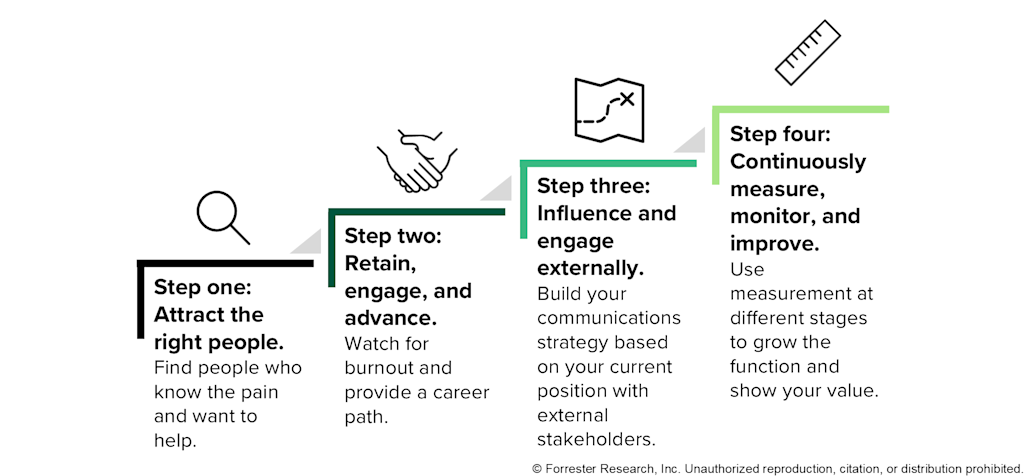
Use Forrester’s Four-Step Framework To Build DevRel
If you think of DevRel as a content creator for developers, you’ll just get content. But if you design your DevRel team instead as a feedback engine for your developer-focused business, you can provide value throughout the organization — to better shape product direction, improve developer perception, build community, and grow revenue. Forrester’s DevRel framework will help you attract the right people, structure and sustain the function, engage developers where they actually are, and measure impact in ways that align to business value.
Interested in learning more? Read Trusted Relations: Growing Developer Relations And Advocacy Beyond Your Organization. Schedule an inquiry or guidance session with me to learn how you can grow DevRel at your organization.
Related Forrester Content