Is Journey Completion Enough To Drive Loyalty?
You might assume that customers completing a journey equals success. But our data shows that’s not true. When customers complete their journey but are uncertain whether what they did worked, it undermines loyalty.
This blog is part of a series on how customer journeys drive loyalty (scroll to the end for all resources).
Customers’ Uncertainty On Whether What They Did Worked Undermines Loyalty
We’ll take one example journey: utility customers who wanted to get help with their bill. Among those who said they achieved their goal of getting help with their bill and felt confident that it worked, 36% belonged to the very-low-loyalty group. But among customers who said they achieved their goal but were unsure it worked, 76% were low-loyalty customers — that’s more than twice the amount (+40 percentage points).
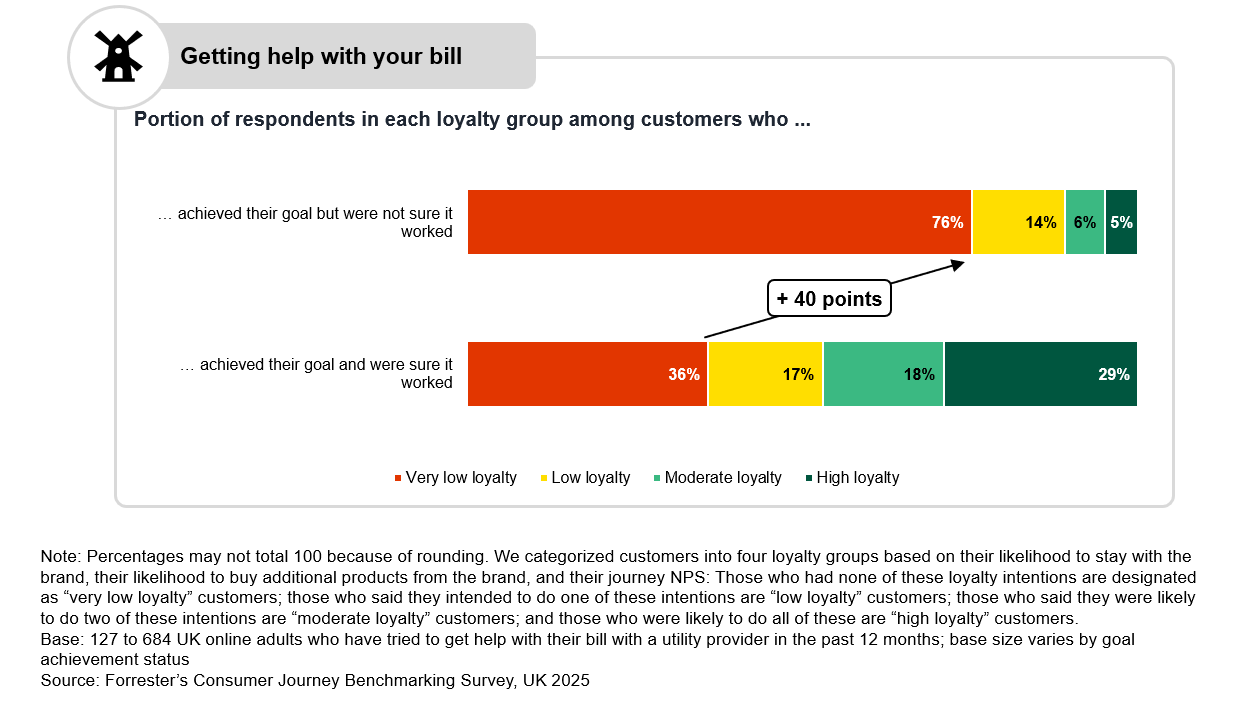
Don’t Just Get Customers To The Finish Line — Make Sure They’re Confident That They’ve Arrived
Design For Goal Achievement With Confidence
Design journeys such that customers can achieve their goal and know that they have succeeded. For example, already since 2012, Swedish blood donation centers have been sending donors a text message when their donated blood is used. The UK and Australia are among the countries that followed suit. This signals to the donor that they reached their goal — which isn’t to donate blood but to help a patient.
It works! A study by the University of Hamburg showed that text messages alerting donors when blood is used increased the number of donations by over 10% and the probability that inactive donors can be reactivated by more than 12%.
Measure Goal Achievement And Confidence
Your existing completion measurement is useful, but keep in mind that it doesn’t necessarily measure goal achievement, and it for sure doesn’t measure confidence. If you collect feedback about journeys, use that chance to ask if people feel confident that it worked, or measure how many people call you with questions about a goal they supposedly already achieved.
What Should You Do Next?
Don’t stop at designing and measuring for confident goal achievement. Dive into our other key findings and recommendations for improving journeys in ways that drive loyalty:
-
- Get an overview of all findings in our blog Do You Improve What Matters To Loyalty In Customer Journeys? and get all details in the report Five Journey Practices That Strengthen Customer Loyalty (Forrester Decisions access required).
- Find out in our companion blogs about:
- If you are a Forrester client, request an analyst call.
Categories