Apple Turns 50. Now Comes The Reckoning.
On April 1, Apple turns 50. In his anniversary letter, Tim Cook reflects on the company’s founding beliefs and invokes the long-standing manifesto “think different.” It’s a fitting tribute. A company that many assumed would struggle to find its footing after Steve Jobs has instead compounded its advantage under Cook — not by abandoning its principles but by institutionalizing them.
The secret sauce was never just product. It was an obsession with simplicity — a refusal to ship until it felt inevitable — and a deeply held belief that technology must be personal. (For those with Forrester access, I explore this in my research report, Apple “Brands Different”: Lessons From The World’s Most Valuable Brand.)
But anniversaries are deceptive. They invite reflection when what is required is foresight. At 50, Apple is not at a milestone but at a crossroad.
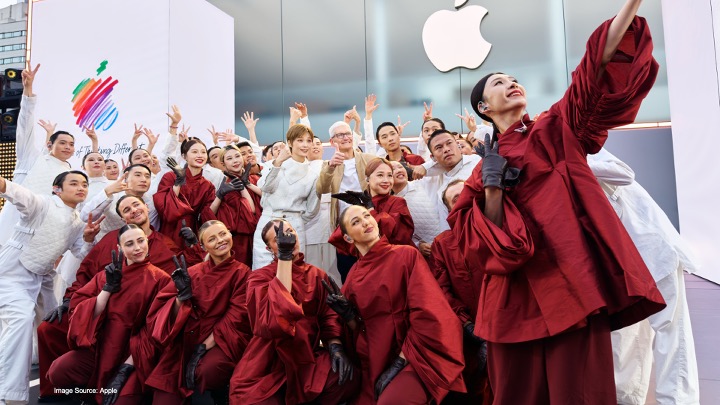 First, Apple must escape the gravity of the iPhone.
Products like the iPhone come along once in generations, and they define a company. The numbers tell the story: Roughly half of Apple’s more than $400 billion in annual revenue still flows from this single device. It is not just a product; it is the economic engine and the organizing principle of the company.
But dominance creates drag. The primary interface through which humans interact with technology in the very near future will not be an iPhone. It won’t even be a phone; it will likely be ambient, distributed, and worn — glasses, earbuds, rings, pins, and other form factors we are still experimenting with. The question is not whether that future arrives. It is whether Apple can disrupt the very product that made it indispensable — before someone else does.
Second, the fast-follow playbook will need to be fine-tuned.
Apple’s quiet superpower has been disciplined patience: Let others go first, learn from their mistakes, and then deliver something meaningfully better. “Anything you can do, we can do better” has yielded superior PCs, headphones, watches — entire categories reimagined.
But the dynamics of innovation are shifting, and Apple is showing strain. Apple’s wait-and-watch and then push into AI, branded as Apple Intelligence, has yet to demonstrate the kind of traction the company is accustomed to. Meanwhile, competitors are training users into new behaviors. Meta, for example, has already built significant momentum behind its glasses. The question is no longer whether Apple can be better. It is whether “better” will be enough if it is also later.
Third, Apple must shift its center from devices to the ecosystem.
The most consequential change inside Apple over the past decade has been the rise of services. Businesses such as Apple Music, Apple TV, Apple Arcade, Apple News+, and the App Store now generate roughly half the revenue of the iPhone — and at materially higher gross margins, often exceeding 70%. This is not just revenue diversification; it is a transformation of the revenue model. Apple’s devices become gateways — portals into a high-margin, recurring-revenue ecosystem of content, subscriptions, and services.
If the first 50 years were governed by hardware cycles, the next 50 will increasingly be governed by lifetime value, which leads to the real shift: Apple is quietly evolving from a company that sells products to one that monetizes relationships — and that is a very different business.
——————————————————————————————————————————
Follow my work: Go to my Forrester bio and click “Follow.”
Chat with me: If you are a Forrester client interested in discussing these topics, please schedule time with me for an inquiry or a guidance session.
Plan a session: If you are a Forrester client looking to host a strategy session on a related topic, please contact your account team or email me at dchatterjee@forrester.com.