Farnborough Airshow: Autonomy, AI, And Some Planes
For one week every two years, the small English town of Farnborough changes. A sea of traffic cones reconfigures roads in bizarre and unpredictable ways; an army of wardens in hi-vis overrules traffic signals, street signs, and the Highway Code to keep traffic moving; a fleet of buses ferry people from obscure fields in odd corners of Hampshire to the town’s usually sleepy airport; and hotel prices for miles around go crazy. Farnborough International Airshow (and lots of people in suits and military uniforms) is in town again. No one watching news coverage of the ongoing conflicts in Ukraine or the Persian Gulf will be surprised that autonomy and AI featured prominently in the military offerings at this year’s show, but what about the civil aerospace exhibitors, and what might any of this mean for Forrester’s non-aerospace clients?
“Autonomy” Is Exciting Everyone, Even When It’s Not Really Autonomous
Planes that fly themselves anywhere, like cars that drive themselves anywhere, sound like a great idea — until you think about it. What about weather? What about mechanical issues? What about inadvertent or malicious interference? What, in a military context, about dropping or firing weapons? In these cases, and more, people (and human judgment) are still invaluable. The reality today is more hybrid than the autonomy hype would suggest. While civil and military drones may not have a pilot sitting on board, they’re often remotely operated rather than truly autonomous: There’s a person on the ground, usually making almost every bank and turn with a joystick, sometimes issuing broad instructions for a smarter vehicle to interpret and execute. Systems capable of doing all of this themselves, all of the time, remain more aspiration than reality.
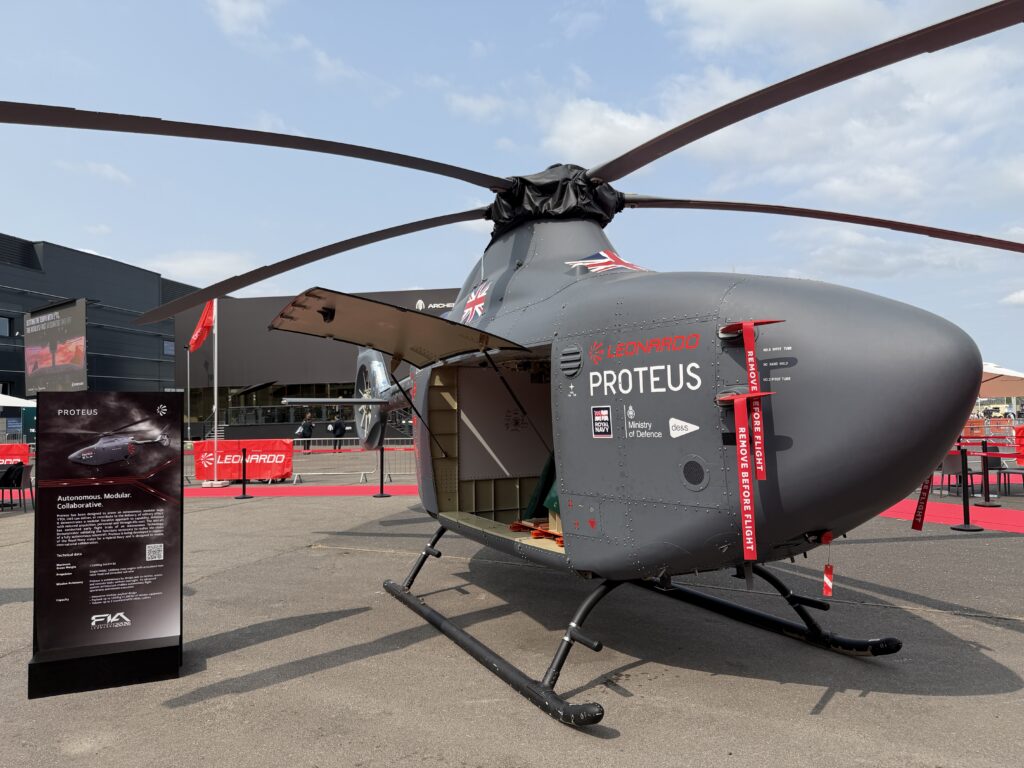
There was a hall full of small Ukrainian companies, offering hardware and software built from lessons learned the hard way. At the other end of the spectrum, Anduril, BAE Systems, BETA, and others showed flashy, life-sized mock-ups of uncrewed aircraft that may one day enter service. BAE Systems’ contribution, the Brontanax, is an example of a collaborative combat aircraft, explicitly designed to fly with piloted jets like today’s F-35 (which loudly made its presence heard during the aerial displays at Farnborough) or the UK’s future Tempest.
Rather smaller and quieter, Capgemini’s Open Mission Network for Interoperability, Security, and Sovereignty (OMNISS) demonstrator did a nice job of showing how drones and other assets work together to solve problems, even with poor connectivity.
Electric Urban Air Mobility Gets More Real, Touches Defense, And Goes Tartan
People have been talking about urban air mobility for years. The term might sound unfamiliar if you’re not in the space, but you’ll definitely recognize its colloquial version — flying taxis. There was plenty of urban air mobility at Farnborough this year, with the likes of Archer Aviation, Embraer, Joby Aviation, and Vertical Aerospace all showing life-sized mock-ups of aircraft, most of which still had space for a pilot. Joby signed a splashy deal with Virgin Atlantic, promising to (one day) whisk Virgin’s passengers between international airport and city center in London and Manchester. But UK startup Vertical grabbed attention at the show, actually flying a real aircraft several times. While flying isn’t particularly remarkable at an airshow, Vertical took the opportunity to complete its first “transition flight” in public: The aircraft took off vertically (like a helicopter), then angled its propellers horizontally to fly like a plane before returning propellers to vertical positioning and landing like a helicopter. Vertical’s current aircraft is intended for civil use, but as part of a wide-ranging panel discussion organized by Dassault Systèmes, chief engineer David King told us that the company is also exploring defense use cases. Defense contractor Anduril and urban air mobility startup Archer offered their own interesting take on dual-use technology, with Anduril announcing the threateningly named (and styled) autonomous strike drone Thunder before Archer followed up with the cuddlier commercial variant of the same platform, Halo.
Urban air mobility is usually fixated on solving urban transportation problems. The use case is invariably the journey from Heathrow to Canary Wharf or JFK to Manhattan. Those are big problems to solve, addressing customers with pockets deep enough to pay almost anything. These are people who sit in the back of an Uber or a Lyft for hours, being driven in to cities from distant airports rather than catching the cheaper (and often faster) trains along with the rest of us.
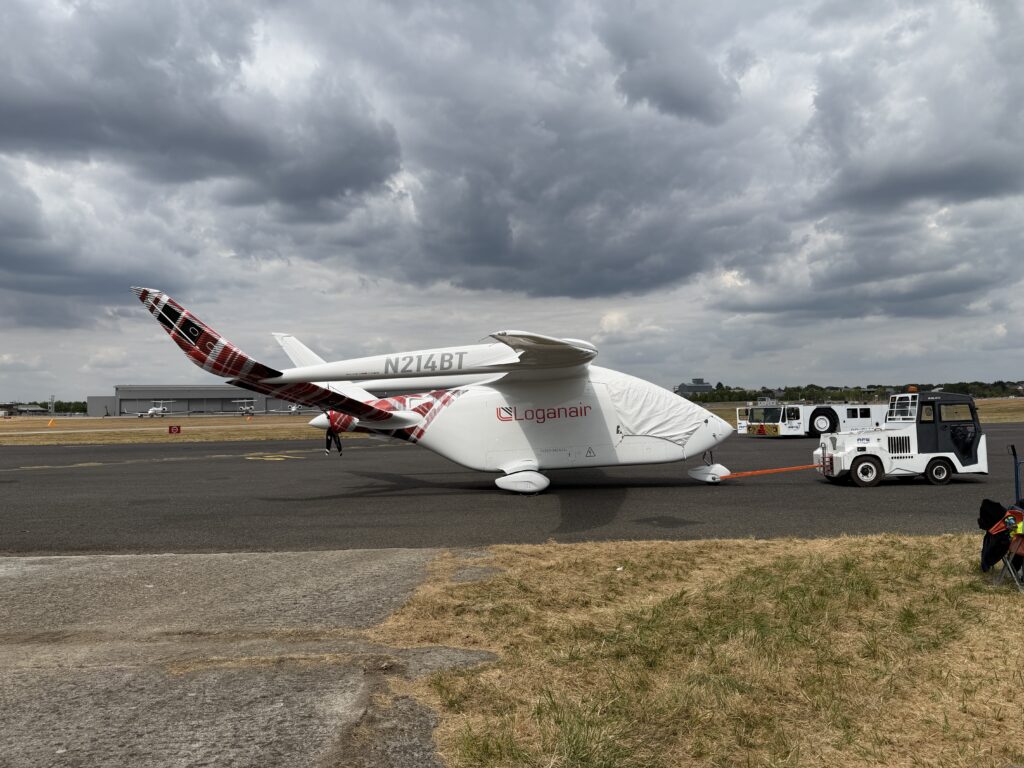
Lightweight materials, electrification, and other underpinnings of urban air mobility may be even more transformative in other areas. The audience is smaller and the budgets are tiny, but improving connectivity to remote rural communities would be genuinely useful. Loganair announced an agreement to buy five (non-autonomous) electric aircraft from BETA Technologies and hopes to have them serving Scottish islands before the end of this decade. Disappointingly, nothing was said about who would serve the Tunnock’s caramel wafers (if you know, you know).
Enterprise AI On The Back End Meets Physical AI On The Front
The breathless enthusiasm for sticking AI in and around everything is — thankfully — becoming a little more rational and nuanced. Dassault Systèmes showed some carefully considered use cases for its new virtual companions (which every other company on the planet would probably call agents) AURA, LEO, and MARIE. Physical AI — which perceives, reasons, and acts in the real world — is also becoming more important. Forrester has published a report that’s part of our effort to prevent this becoming another term that’s so squishy and misused that it becomes useless: There’s a useful concept and scope here, which we should agree to protect.
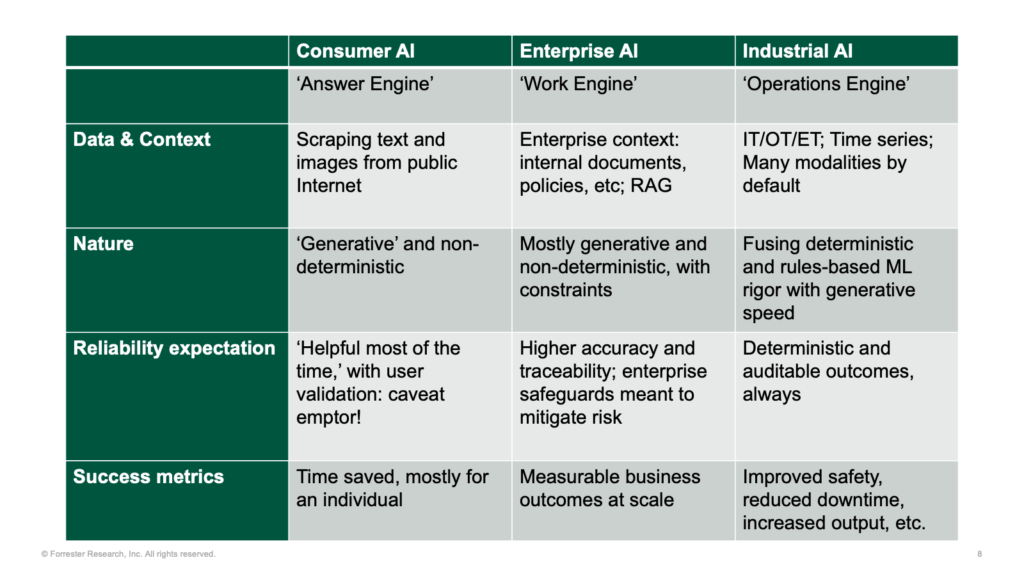
In conversations with system integrators like Capgemini and TCS, it also became clear that they and their clients are taking a far more thoughtful approach than they (we!) did in the first rush to grab as big a piece of the AI hype pie as possible. Conversations about the distinction between AI to augment IT workflows and AI to enhance business processes were particularly interesting and aligned well with some thinking I’ve been doing about the differences between regular consumer chatbots, enterprise AI tools, and true “industrial AI” — if that’s just any use of AI in an asset-intensive industry (which is how many seem to use the phrase), then it’s a wholly unhelpful term! I should poke at this a little harder.
In previous research, we’ve looked at the ways in which mobility systems are becoming increasingly connected, autonomous, shared, and elecrtric. This year’s airshow helped make many of the findings from that research tangible and will feed into ongoing research stream.
Brian Hopkins and I presented a Forrester client webinar on July 28 covering autonomous transportation technologies as part of Brian’s top emerging technologies series. Watch the replay here.
And as always, if you have your own perspectives to share, please schedule a briefing and tell me all about them. If you’re a Forrester client and want to discuss (or challenge) my thinking on these topics, schedule an inquiry or guidance session.
Related Forrester Content
Categories