Stop Treating Revenue Enablement Platforms As “Set And Forget”
B2B sales leaders often buy full-suite revenue enablement platforms (REPs), expecting them to behave like reliable home appliances: Configure once, then enjoy uninterrupted, with effortless performance thereafter. But platforms blending sales content management, learning, coaching, and analytics behave nothing like appliances. They operate more like a powerful but sensitive system that needs intricate setup, followed by ongoing tuning and purposeful care. Underestimating this dynamic slows adoption, dulls seller engagement, and ultimately prevents teams from realizing the commercial impact these platforms can deliver when operated as ongoing, strategic programs.
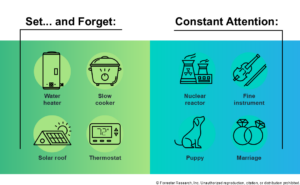
- The plug-and-play myth persists — and it destroys value. Vendor messaging often emphasizes quick deployment, intuitive interfaces, and rapid time to value, not to mention hyperaggressive, overly aspirational improvements in lagging sales indicators. With AI-amped budgets creating both tech sprawl and pressure to show ROI, leaders understandably want to believe a REP can deliver immediate lift. Yet the real-world user experience in our own evaluations is clear: The teams that unlock value do so through implementation rigor, active customer success partnership, and ongoing operational ownership, not from flipping a switch. Leaders should revisit their deployment plan regularly and align it with real sales motions and business outcomes, not aspirational timelines. The takeaway: Autopilot won’t get this mission off the ground; revisit your deployment plan to keep the platform flying in the right direction.
- Taxonomy is the foundation for everything. REPs deliver value only when the underlying structure — the taxonomy and metadata — is accurate, consistent, aligned to user needs, and maintained over time. Taxonomy determines what sellers see, how search and genAI behave, what gets recommended, and which insights appear in dashboards. When it’s messy, outdated, or overly complicated, sellers lose trust quickly. A strong taxonomy owner, quarterly audits, and conventions aligned to buyer and product realities are essential. The takeaway: A taxonomy isn’t a spice rack; deploy it as a multidimensional carousel delivering information instantly to sellers.
- Content governance must be continuous. Full-suite platforms amplify whatever content discipline or chaos already exists. Great libraries make REPs indispensable; weaker and disorganized collections make them irrelevant. Generic content, poor version control, and inconsistent messaging quickly ripple across readiness, manager coaching, and digital sales rooms. Top enablement teams maintain a content lifecycle with clear ownership, clarity about seller and buyer needs, monthly pruning cycles, and structured refresh points tied to product and campaign updates. The takeaway: Content behaves like a garden; prune, weed, and refresh it so only the healthiest assets reach your sellers.
- Readiness pathways must reflect real selling situations. The integrated power of an REP shows up when content, practice, and certification reinforce each other. Learning pathways and AI-supported role-plays work best when they reflect real buyer conversations, objections, and behaviors. Organizations that only refresh pathways annually miss opportunities to support new messaging, competitive shifts, and product launches. Aligning readiness with actual deal paths keeps sellers equipped for what they face today, not in the last quarter. The takeaway: Readiness pathways work like a GPS; update them whenever the route changes so reps don’t get led off course.
- Enablement teams and vendor customer success managers shape outcomes together. The strongest REP outcomes occur when internal enablement teams and vendor CSMs operate like a shared cockpit crew. Your enablers create the program strategy, design the experiences, oversee the workflows, and maintain the tool, taxonomy, and assets. Vendor CSMs provide best practices, adoption plays, roadmap previews, and support escalation — and if they’re not, complain! Organizations that meet jointly on a structured cadence see higher adoption, cleaner metadata, and more effective program governance. The takeaway: Treat your enablers and CSMs like copilots; align them so the platform stays on course and safely reaches its destination.
- Measurement requires disciplined program ownership. Analytics embedded in REPs provide visibility into behavior change, content effectiveness, and sales readiness but only when fed with clean tagging, consistent data models, CRM deal data, and clear measurement priorities. Leaders who review dashboards infrequently or without defined KPIs rarely see actionable insights. Establishing a regular measurement rhythm, tied to business outcomes, gives enablement teams the evidence they need to make programs sharper and more credible. The takeaway: REP analytics are like an aquarium; test the water routinely to keep the environment healthy and insights clear.
- AI can accelerate value — when the fundamentals are in place. Modern platforms now embed AI to summarize calls, score pitches, recommend content, and generate deal-specific learning assets. These capabilities reduce friction and strengthen coaching but, again, rely entirely on the quality of the content, taxonomy, and data underneath. AI components should be piloted intentionally, checked for accuracy, and continuously tuned using seller feedback and updated signals from the field. The takeaway: AI in a REP works like a sourdough starter; feed it the right inputs and check it often to keep the outcomes strong.
The bottom line for leaders? Revenue enablement platforms pay off when leaders treat them as dynamic systems, not static deployments. With the right structure, partnership, and operating rhythms, REPs can unify content, accelerate readiness, improve seller behavior, and create measurable commercial outcomes. Treating the platform as a living program, not a one-time setup, is how CSOs translate enablement investment into genuine sales performance.
Got questions about revenue enablement technology? Wondering about the next Forrester Wave™ on the topic? Book a guidance session to dive deeper.
Categories