B2B Brand Messaging Is Overdue For An Overhaul
B2B marketing has a brand messaging problem. Buyers consistently tell us that “brand or reputation” is the primary reason they select a vendor, but the messaging designed to create and communicate that brand advantage often misses the mark. Forty-two percent of marketing decision-makers say their brand messaging is incomplete, 37% acknowledge that it isn’t highly differentiated, and 36% say it hasn’t been tested with key audiences such as customers or employees.
That’s more than a communications failure. It’s a go-to-market problem. Done well, brand messaging becomes the common strategic narrative connecting corporate communications, thought leadership, product and solution messaging, campaign themes, sales conversations, employee communications, and more. Yet, too many organizations produce messaging that fails to connect with their target audiences.
Make Brand Messaging A Strategic Asset For Driving Growth
Your brand messaging should provide a strategic center of gravity, animating what the business stands for and reinforcing go-to-market strategy. It should instill consistency across all audiences a brand seeks to connect with, while providing the foundation for themes and ideas that permeate thought leadership, product and portfolio messaging, and more.
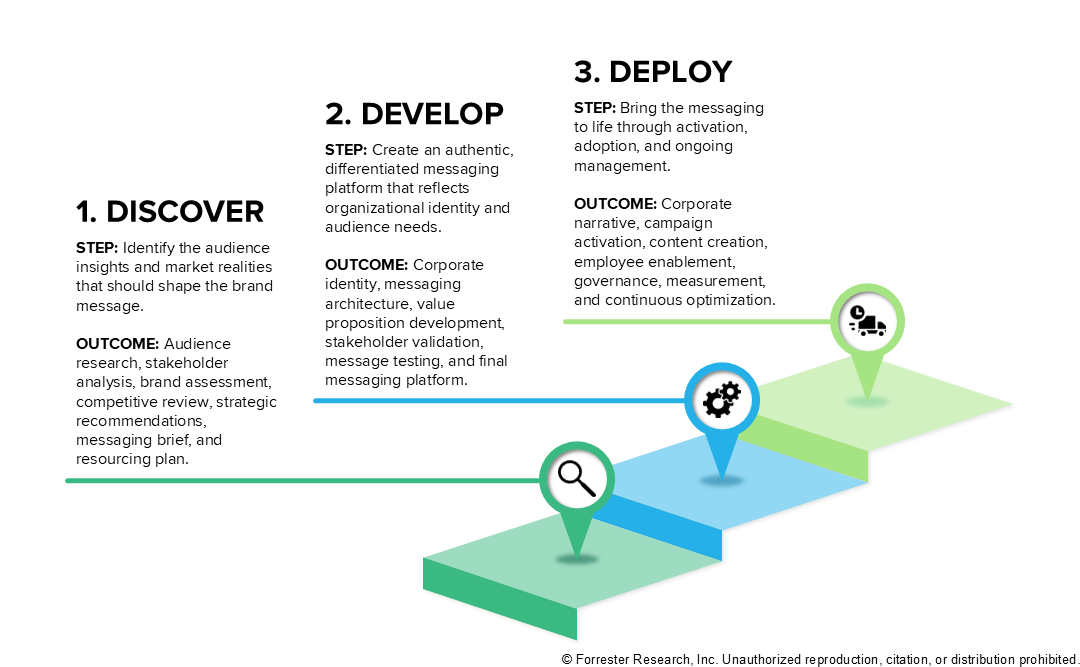
Fixing the “off-target” messaging problem doesn’t start with hiring a better agency or copywriter. It starts with your audiences. Our research proposes a three-stage process (a “3D model”) for creating effective brand messaging:
- Discover: Begin the messaging process by understanding the needs, motivations, expectations, and perceptions of customers, prospects, employees, and other strategically important audiences. This “outside-in” perspective should be driven by independent research and data, rather than the predilections of executives or loud opinions. The output of this first step is a detailed plan for building the messaging, with directional guidance on what needs to be accomplished, how the messaging will be developed, and resource requirements. The latter is critical: too often, messaging is developed without thinking forward to the necessary activation process and related campaigns and investments.
- Develop: Only once the Discover phase is complete and the plan is agreed, should companies begin developing the messaging itself. The output of this step is the corporate identity, message architecture, Unique Value Proposition (UVP), proof points, and more. This step of the process also needs to focus on the points of connection between the corporate message and other messaging elements; for example, how corporate messages directly supports thought leadership topics or employee communications.
- Deploy: Finally, deploy the messaging through audience narratives, campaigns, content assets, sales programs, recruiting, customer engagement, and other expressions of the brand. This final step will involve campaigns and programs intended to engage audiences, along with clearly articulated goals and objectives. The Forrester Reputation Program Decision Model can help formulate these activities, while Preference Marketing playbooks connect brand and demand objectives. This launch process can take months and should involve the whole company.
Make The Message Work Harder
Brand messaging has become more urgent as buying behavior changes. AI-powered discovery and answer engines increasingly mediate how buyers find and evaluate providers, making clarity, consistency, differentiation, and authority even more important. Great brands are ruthlessly consistent, instantly identifiable, clearly different, and audience-centered. So don’t ask whether your brand message sounds good to you and your executive team. Ask whether it connects the business with a unified value story and effectively engages audiences.
Find out more about the 3D model for developing brand messaging in my new research report, or reach out to learn how Forrester can support your latest messaging initiative.
Related Forrester Content