From Endpoints To Orchestration: HP’s Plan To Redefine The Future Of Work
At the HP Imagine 2026 event, HP made one thing clear: It no longer wants to be seen as a device company. It’s positioning itself as a future-of-work platform provider — one that connects devices, software, security, and workflows into a single, AI-orchestrated employee experience.
It’s a bold shift but a necessary one. The problem HP is going after isn’t hardware. It’s work friction.
HP Is Designing For Flow, Not Just Function
HP framed a familiar and highly relatable reality: Work is getting harder, not easier. Digital friction, complex ecosystems, and broken hybrid experiences are (still) slowing employees down. HP’s answer is to move beyond managing endpoints and to start engineering flow across the entire work experience.
This showed up in three big bets:
- AI at the edge that is faster, more secure, and less dependent on cloud
- An AI-driven orchestration layer (HP IQ) to connect experiences across devices, environments, and people
- A unified ecosystem spanning PCs, workstations, collaboration, print, and IT operations
It’s a shift from hardware and devices to systems of work that aligns closely with where IT and digital workplace leaders are heading.
AI At The Edge: From Answers To Autonomous Work
HP is going all-in on edge AI, and that may be where its strategy feels most differentiated.
The message: Move AI closer to the device to improve latency, reduce cloud costs, and increase control. In practice, that means AI PCs with meaningful on-device performance and workstations that bring cloud-scale AI workloads on-premises.
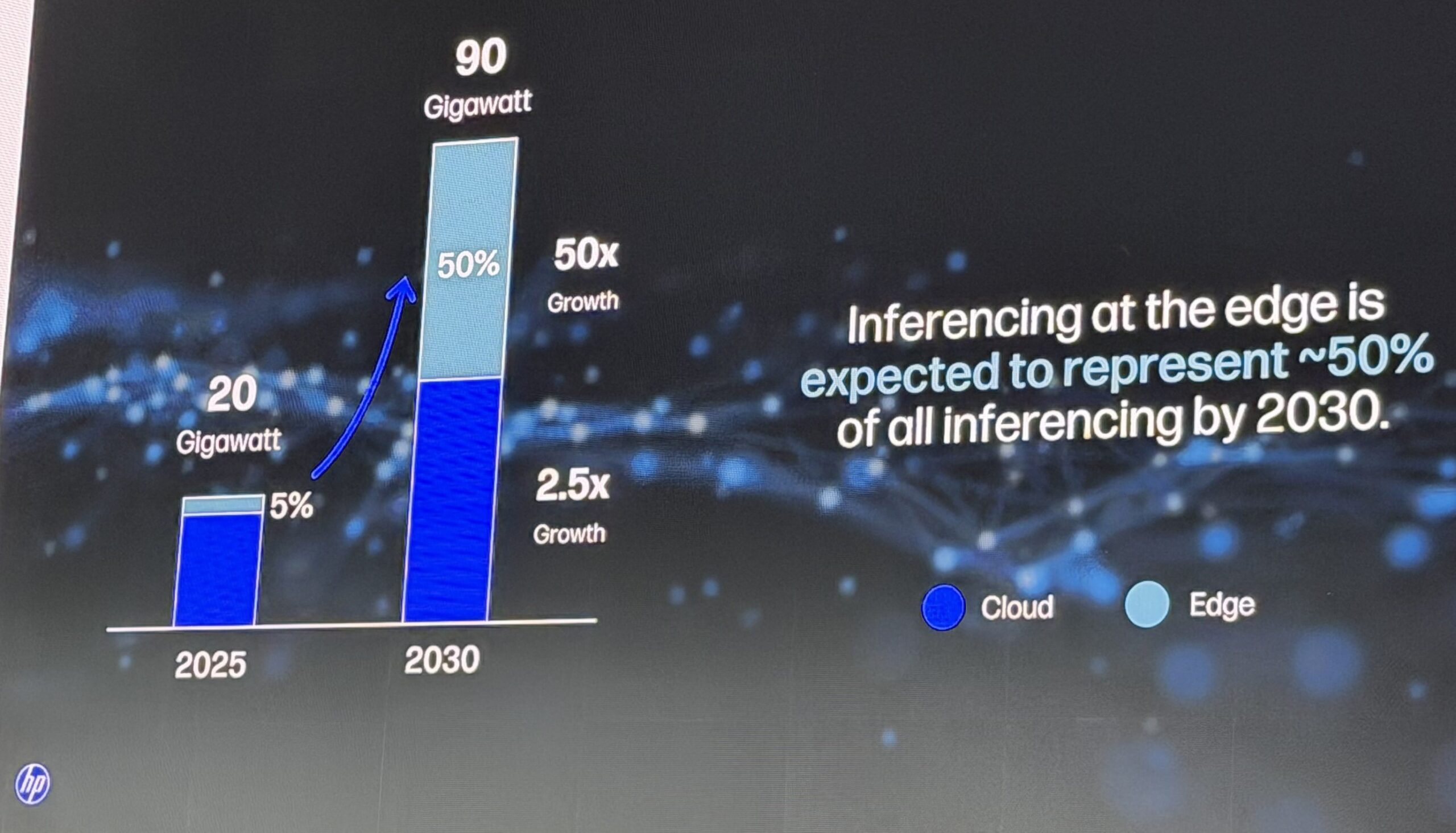
This is both a technical and an experience shift. Better local performance translates into less waiting, fewer interruptions, and more dependable AI experiences. This is especially true in security-sensitive or low-connectivity environments.
Edge AI can meaningfully improve performance and resilience but only when IT leaders treat it as a deliberate workload and refresh-cycle decision, with clear governance, cost discipline, and modern endpoint management to avoid trading cloud inefficiency for edge sprawl.
HP IQ: The Most Important Move
The centerpiece of the event was HP IQ, an AI orchestration layer that is native to the device and designed to connect work across devices, people, workspaces, and workflows.
In plain terms: HP wants to be the control plane for how work happens.
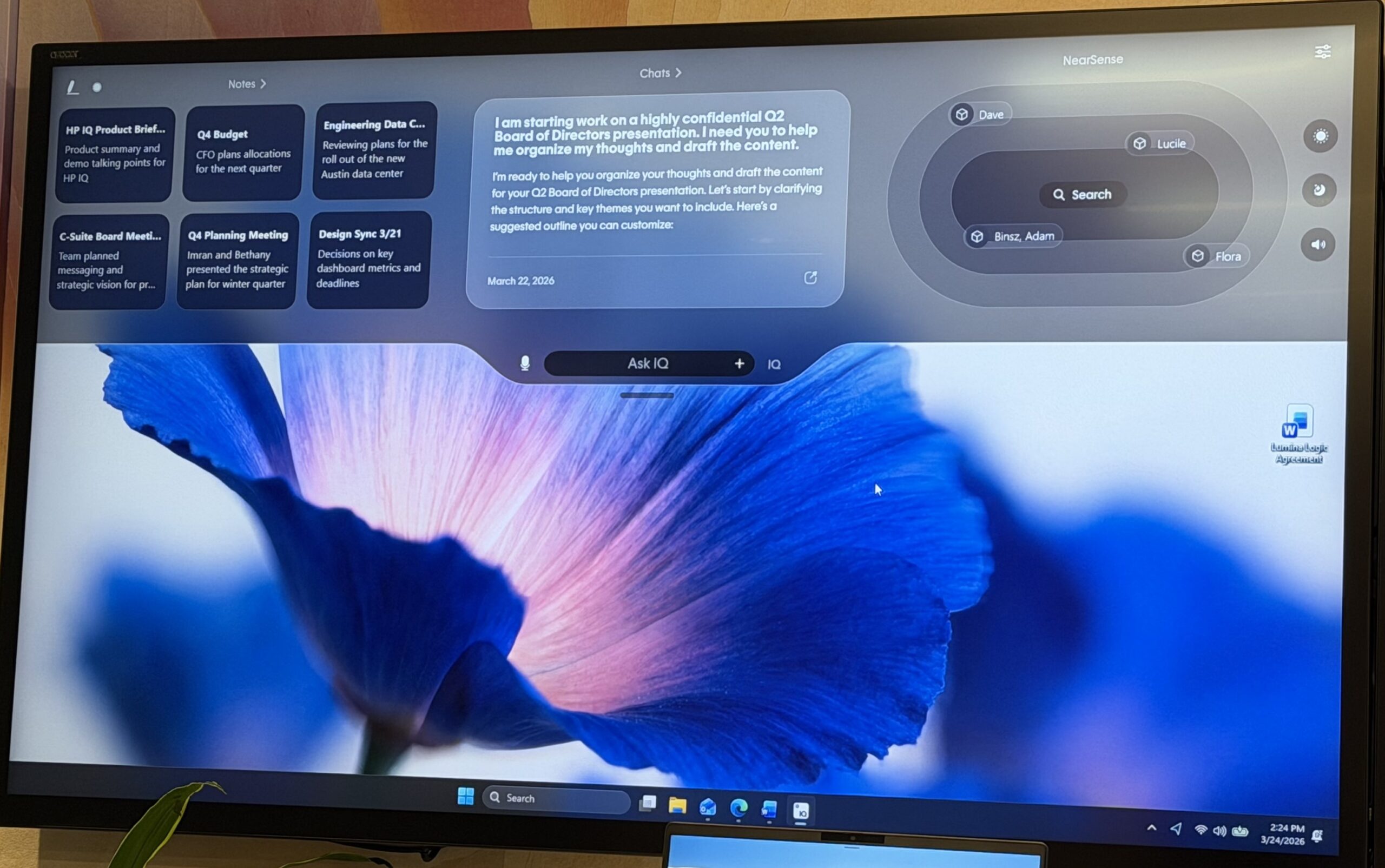
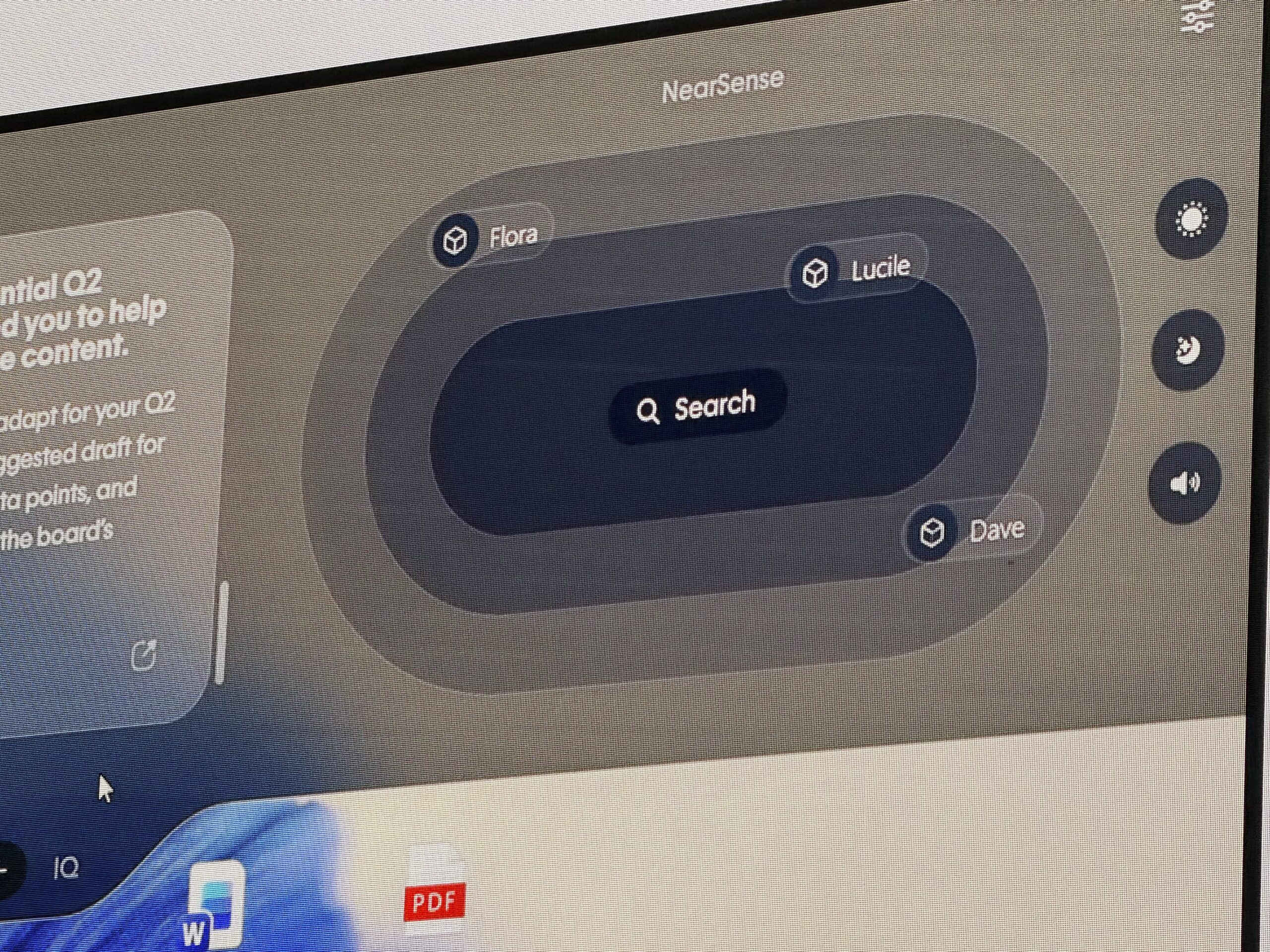
Notable features include:
- Device-to-device connectivity (NearSense): Enables seamless, proximity-based collaboration by allowing devices to discover each other and securely share content (click-and-drag) without manual pairing. This aims to reduce friction in common workflows such as file sharing, meeting handoffs, and in-office collaboration.
- A universal user interface (“visor”) that spans devices and contexts: Provides a consistent, AI-powered interface that follows employees across PCs, workstations, and meeting spaces, adapting to how and where work is happening. By unifying interactions into a single experience layer, it aims to reduce fragmentation between tools and environments while making AI more prevalent in everyday workflows.
- Expanding AI PCs to everyday knowledge work: HP IQ delivers familiar capabilities such as document analysis, generative AI (“Ask IQ”), and meeting transcription directly on device. This lowers the barrier to scale AI PCs to the broader workforce beyond high-compute, high-tech roles while also enabling AI capabilities for security-sensitive, low- or no-connectivity, and compliance-bound work environments.
HP IQ is compelling but still early in its roadmap. Limited integrations with other common enterprise technology tools create a risk of adding another layer to an already fragmented AI landscape.
IT leaders should take note, however, that AI orchestration as a new architectural layer is a fast-growing trend. Leaders should begin to define where this fits into their broader digital workplace architecture, how it integrates across, and who (or what) governs it.
Print Isn’t Dead — It’s Been Waiting For A DEX Strategy
One of the more interesting moves is HP’s push into connecting physical and digital workflows, especially in the architecture, engineering, and construction industry. HP is leaning into solving the problem of productivity break downs when digital collaboration is disconnected from the jobsite, including through:
- AI-enabled design and print workflows (HP Build Workspace): Capabilities such as intelligent drawing management, version control, and QR-based plan tracking help ensure that teams are always working from the latest information, reducing rework and misalignment.
- Edge innovation where work happens: AI vectorization on multifunction printers, connected print and scan workflows, and purpose-built devices such as SitePrint bring automation directly to the edge, turning print into an active part of execution rather than a bottleneck.
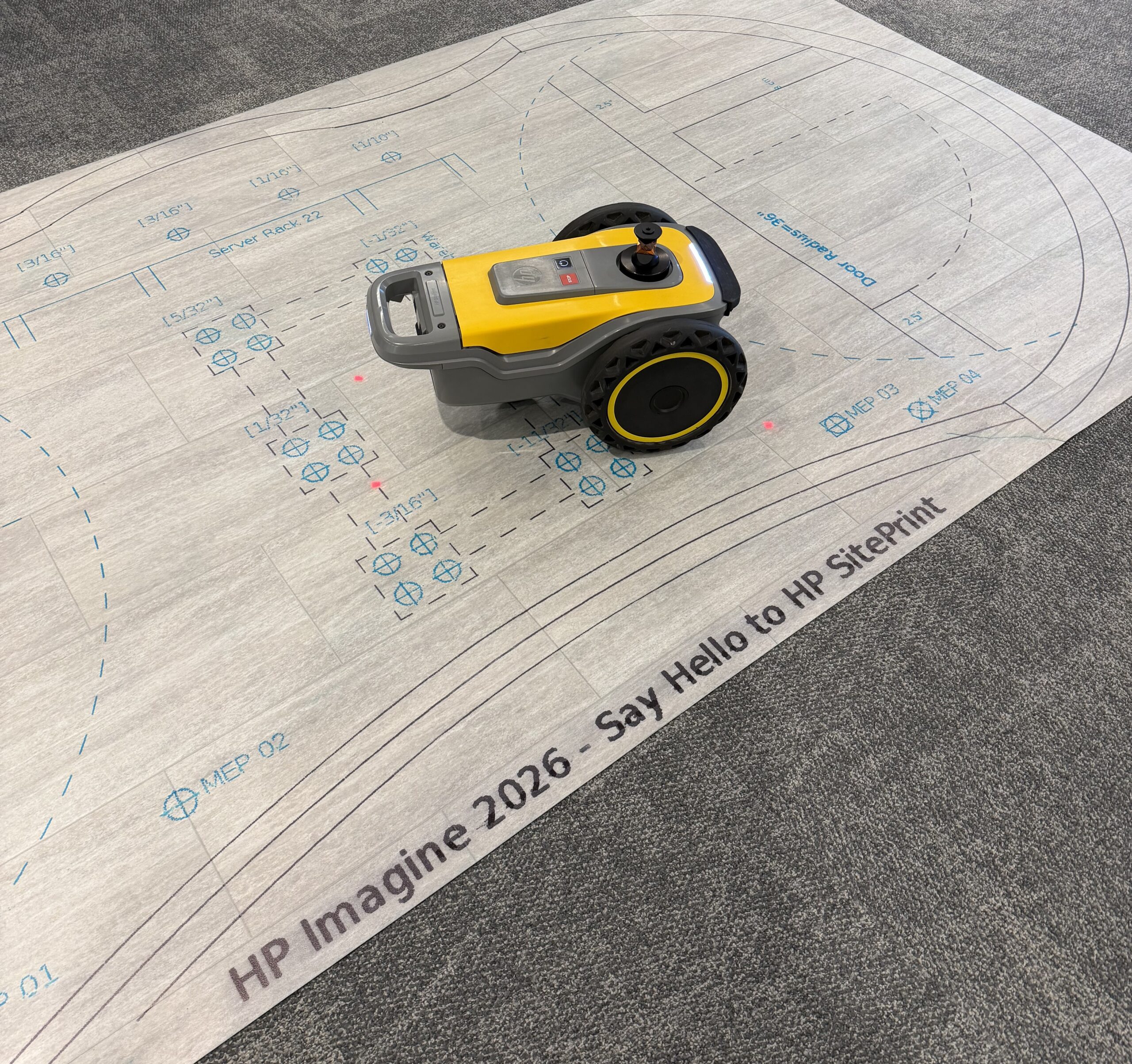
The insight here is bigger than print alone: Digital employee experience (DEX) improvements win when they’re embedded in real work. HP is designing for where work physically happens, and that includes work environments where print, scan, and paper still matter.
WXP: Quietly Becoming The DEX Control Center
HP’s digital employee experience management (DEXM) solution, the Workforce Experience Platform (WXP), didn’t get the flashiest headlines at the event. From my perspective, however, it is the most important lever for HP to deliver on its “connected ecosystem” vision.
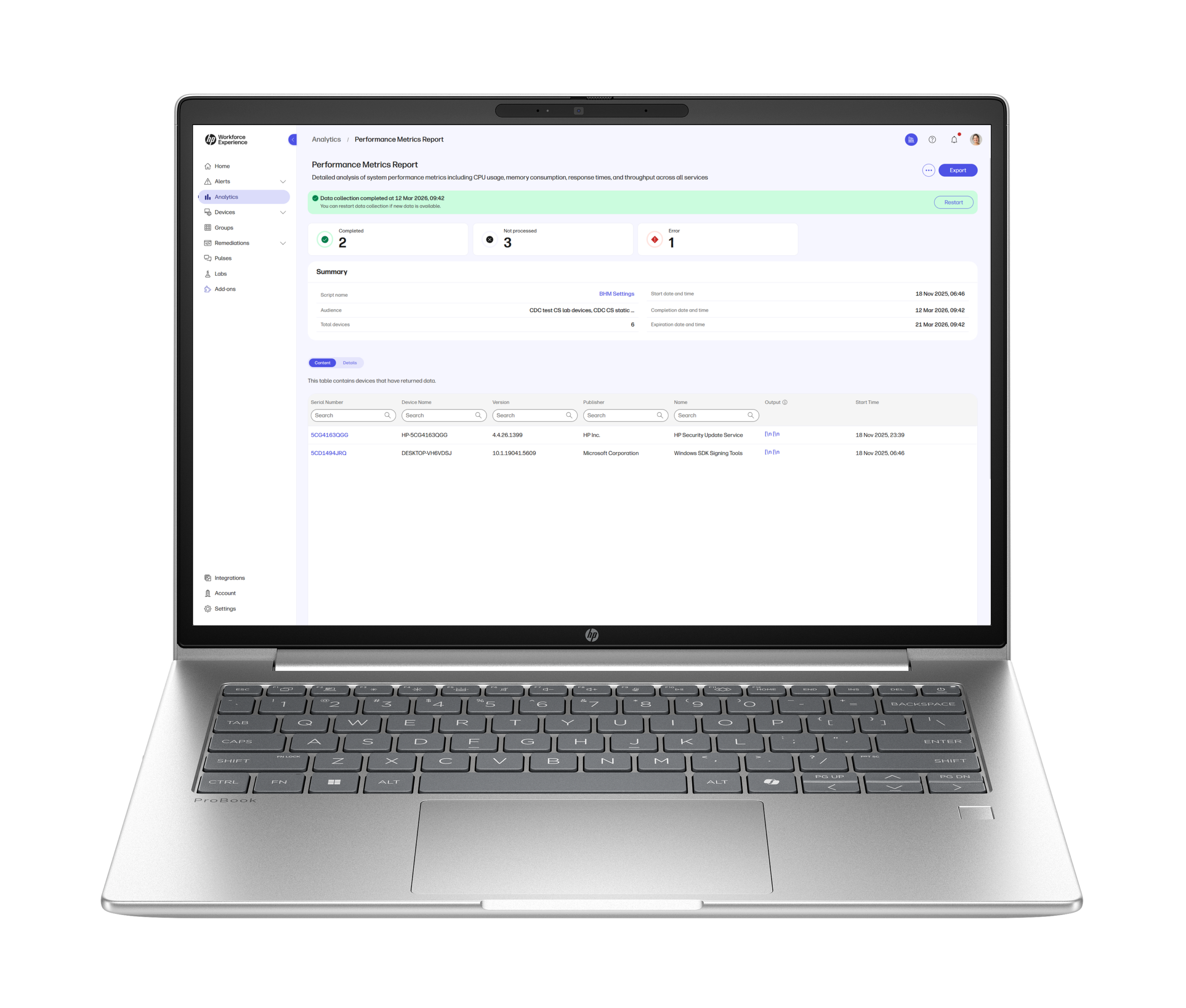
Newly introduced WXP features include:
- Sentiment pulse notifications in MS Teams: Collect qualitative employee feedback just in time or at moments that matter with the ability to push audience-targeted pulse surveys directly to Microsoft Teams.
- Low-code, no-code automation: A new workflow builder enables IT teams to build and deploy custom remediation scripts using low- to no-code to accelerate response times and scale operational efficiency.
- Deeper device and performance analytics: Greater visibility into device health, resource usage, and software utilization enables data-informed decisions on device rationalization and refresh cycles amid rising PC costs and ongoing IT budget pressure.
AI-driven remediation and low-code automation can meaningfully reduce operational toil, but without strong guardrails, team coordination, and rollback controls, organizations risk automating inconsistency rather than experience. The shift from reactive to proactive requires operational discipline as much as platform capability.
My Take: HP Is Right On Strategy But Will Need To Differentiate
A conversation I had recently with a digital workplace leader stuck with me when they said:
“HP is everywhere at work … but you don’t really know where.”
That’s been the brand challenge. HP has been everywhere at work for decades but largely invisible, powering the experience behind the scenes rather than defining it. The message at HP Imagine made the shift clear: HP is ready to step out of the background and into the role of experience orchestrator, not just infrastructure provider.
The strategy makes sense –> a connected enterprise ecosystem powered by AI.
But with almost every major enterprise vendor using a similar narrative, HP’s success will hinge not on vision but on execution and meaningful differentiation.
Interested in continuing the conversation? Let’s connect on LinkedIn. Or if you’re a Forrester client, schedule an inquiry or guidance session with me.