This Valentine’s Season, Gift V-For-Value With Personalization Tactics They’ll Actually Love
With that love/hate Valentine’s holiday around the corner, retail America tells us it’s time to let the people in your life know you care about them. Valentine’s Day gift staples like flowers or chocolate may be the standard. But gift-givers who assume that their loved ones want these commonplace offerings may end up falling flat. Perhaps they might find the trendy Owala water bottle more relevant and valuable?
For organizations embarking on consumer personalization initiatives, creating relevancy and value for those you love (i.e., your customers) should be a year-round discipline. If your customers are dehydrated athletes who would benefit from a water bottle, don’t give them flowers and chocolate. Lead with what’s best for your customers contextually while balancing your business objectives for personalization tactics. The long-term importance of happier customers who perceive more relevance and value from your organization supports your business goals, even with the potential added water bottle expense.
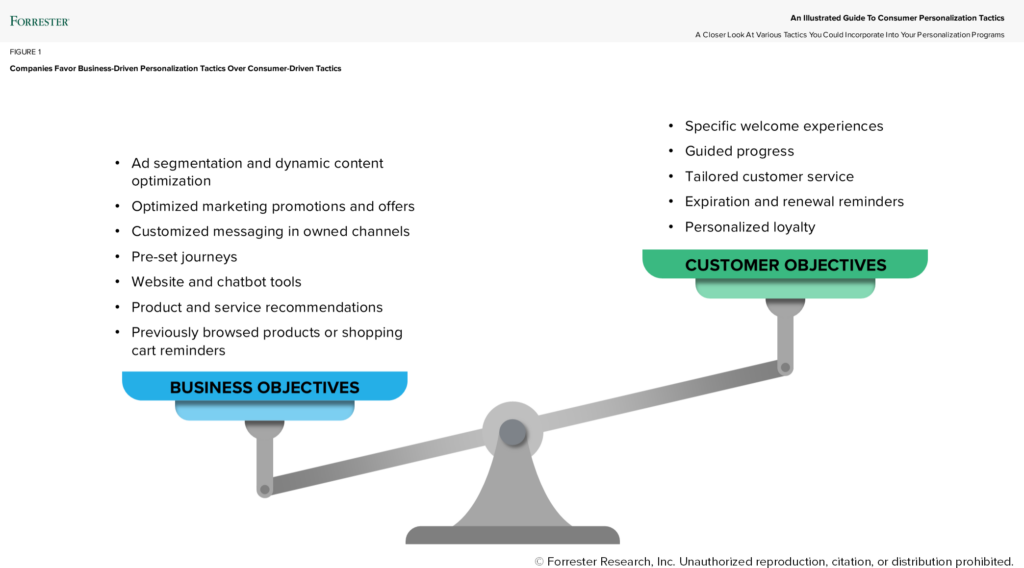
Consumer personalization initiatives should start with consumer insight and a vision, followed by execution consisting of strategy, data, technology, and measurement. These programs should balance personalization tactics that create relevancy and value for both the consumer and the business (see figure).
- Business-driven tactics optimize for sales and marketing goals. Organizations typically implement personalization tactics in the earlier stages of the customer lifecycle to encourage prospecting and conversion. These tactics are designed to achieve internal business goals.
- Consumer-driven tactics optimize for customer value goals. These tactics tend to fall in later stages of the customer lifecycle, when brands have more customer data to thoughtfully recognize customer preferences, behaviors, purchase history, and loyalty to the brand.
In a follow-up to our original strategy guide, we’ve published new research called An Illustrated Guide To Consumer Personalization Tactics to help brands design tactics that account for both consumers and organizations. The report is chock-full of IRL brand examples from organizations across industries, including tactics such as:
- Ad segmentation and dynamic content optimization
- Optimized marketing promotions and offers
- Customized messaging in owned channels
- Preset journeys
- Website and chatbot tools
- Product and service recommendations
- Previously browsed products or shopping cart reminders
- Specific welcome experiences
- Guided progress
- Tailored customer service
- Expirations and renewal reminders
- Loyalty program rewards
Forrester clients, schedule a guidance session or inquiry to chat with us about any of these consumer personalization tactics in more detail. In the meantime, happy Valentine’s Day to those who celebrate! <3
Related Forrester Content