Why An AI Event Strategy Is Becoming A Leadership Issue, Not A Technology One
B2B event teams are operating under sustained pressure. Budgets are constrained, audience expectations are evolving, and large volumes of event content and data remain underused. At the same time, leaders are under pressure to demonstrate clearer impact from every event they run.
AI offers a way to respond to these pressures. It can improve team productivity, enhance attendee experiences, and extend the value of events beyond live delivery. Adoption has increased significantly over the past 12 months. Yet many teams are still struggling to move beyond tactical experimentation into strategic impact. As one event leader put it, “AI should permeate every aspect of event planning and execution.” But another leader I spoke to captured the dilemma: “When almost anything is possible, where do you start?”
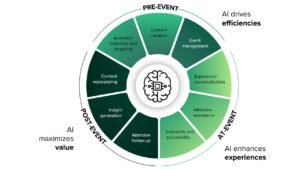
Pre-Event Planning With Less Margin For Error
According to Forrester’s research, 60% of organizations report flat or declining event budgets this year, while 71% expect event costs to increase. This combination leaves little room for inefficiency. Decisions around which events to invest in, which audiences to focus on, and where to scale back are critical decisions. Traditionally, many of these decisions have been guided by precedent, experience, or gut instinct. And while that expertise is still important, it is becoming ever more critical to leverage data and insight.
AI can now help teams assess and select events, validate audiences, and reduce wasted effort. It can also automate and streamline many of the time-consuming, repetitive tasks involved with event setup and delivery, freeing teams to focus on higher-value work. This doesn’t mean that AI replaces human judgment. Instead, it supports it with better data and insight-driven decision-making.
Audience Expectations Are Outpacing Delivery
Forrester’s data shows that two‑thirds of B2B buyers are now Gen Zers or Millennials. These new audiences want events that feel relevant, responsive, and tailored to their needs, yet teams struggle to respond.
More than half of marketers say building interactive experiences is difficult, and nearly two-thirds struggle to deliver meaningful personalization. The result is a growing gap between what audiences want and what events deliver.
AI can help close this gap. Some use cases, like closed captioning and live translation, are relatively straightforward to deploy. Others, such as session and networking recommendations, are more complex. These scenarios depend on access to clean, well‑structured data, an area where many teams continue to struggle. In fact, 63% of leaders identify data quality and structure as a significant challenge, underscoring that improving experience innovation is as much a data issue as a design one.
Extending Value Beyond The Live Event
Events generate high‑quality content and rich audience insight. Yet for years, teams lacked the skills, time, and resources to fully exploit it.
AI is changing this. Teams can now quickly repurpose event content into multiple formats and activate across multiple channels, while structured and unstructured event data can be ingested, analyzed, and shared, making it much more actionable.
Leaders are already focusing their efforts here. Forrester data shows that 43% are using AI to repurpose event content, while 40% are using it to analyze event data and generate insights. This reflects a broad recognition that maximizing event value depends on extending its life and reach.
What This Means For Event Leaders
Flat budgets, rising costs, changing audiences, and underused content and data are the reality for the majority of event teams right now. AI can help address each of these pressures but only with a clear vision behind it.
Leaders need to define how AI fits into their event strategy, establish appropriate governance, ensure access to well‑maintained data, and determine technology requirements. Just as importantly, they need to build AI- and data-literate teams.
At the same time, leaders must remember that differentiated, memorable events are created by humans. The role of AI is to remove friction and augment, not replace, event marketers.
Related Forrester Content