Introducing Neocloud And NeoPaaS: The Next Frontiers Of The AI-Native Cloud
Last year, Forrester introduced the concept of the AI-native cloud, as we observed that the cloud industry was moving beyond commodity infrastructure toward platforms that are purpose-built for generative AI (genAI) and agentic AI. We also identified two emerging paths in this transformation: AI infrastructure cloud platforms (neoclouds) and AI-centric neo-platforms as a service (neoPaaSes).
One year later, those two paths have evolved from emerging concepts into distinct market categories, and we’ve just published two dedicated primer research reports that deep-dive into their strategic business values and capability architectures.
Neocloud represents the infrastructure layer of the AI-native cloud. They’re AI infrastructure cloud platforms purpose-built to deliver high-performance infrastructure for genAI, agentic AI, and other AI-powered workloads, with a primary focus on GPUs and accelerators. Neocloud providers optimize compute, storage, networking, scheduling, and AI operations. Their goal is to provide predictable access to AI capacity, improve GPU utilization, reduce infrastructure bottlenecks, and create clearer economics for AI workloads. As the market matures, neoclouds are evolving from GPU-as-a-service providers into full-stack AI infrastructure platforms that support the complete AI lifecycle across training, inference, retrieval, and live agent execution.
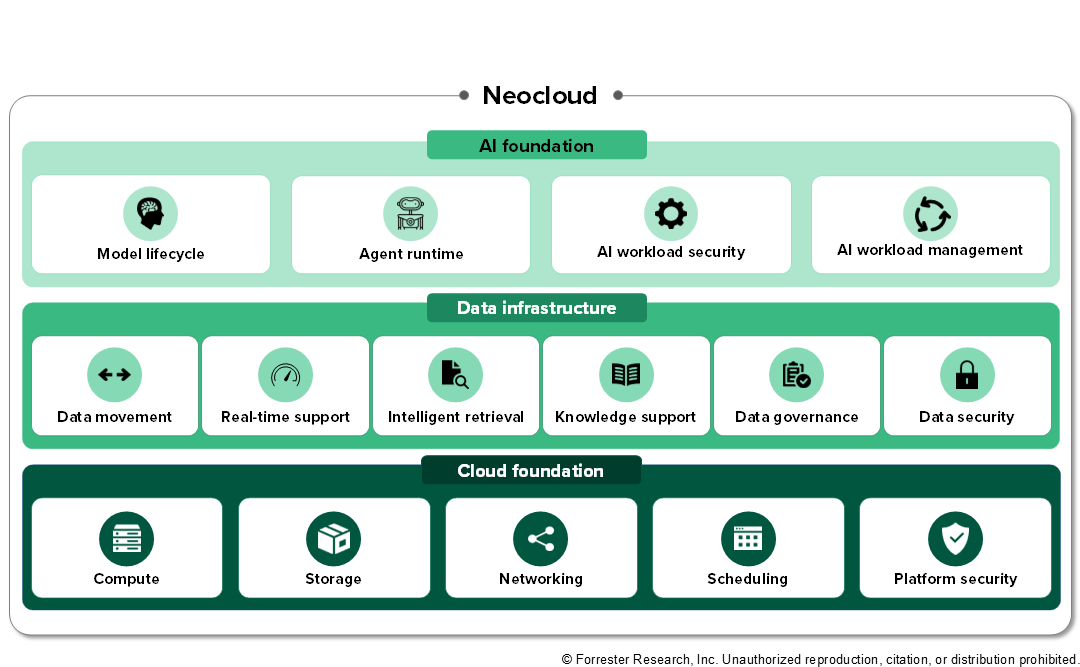
NeoPaaS represents the platform layer of the AI-native cloud. It’s a Kubernetes-based, AI-centric PaaS that makes knowledge management the foundation for agentic AI and unifies application development, modernization, and agentic AI workload management into a governed self-service layer. NeoPaaS revives the original promise of PaaS for the AI era. It enables enterprises to transform fragmented data into governed knowledge products, standardize agent lifecycles, provide self-service developer experiences, and apply workload-aware controls for inference, retrieval, and GPU consumption. Rather than forcing every firm to assemble its own agent stack from open-source components, neoPaaS packages them into a repeatable platform model.
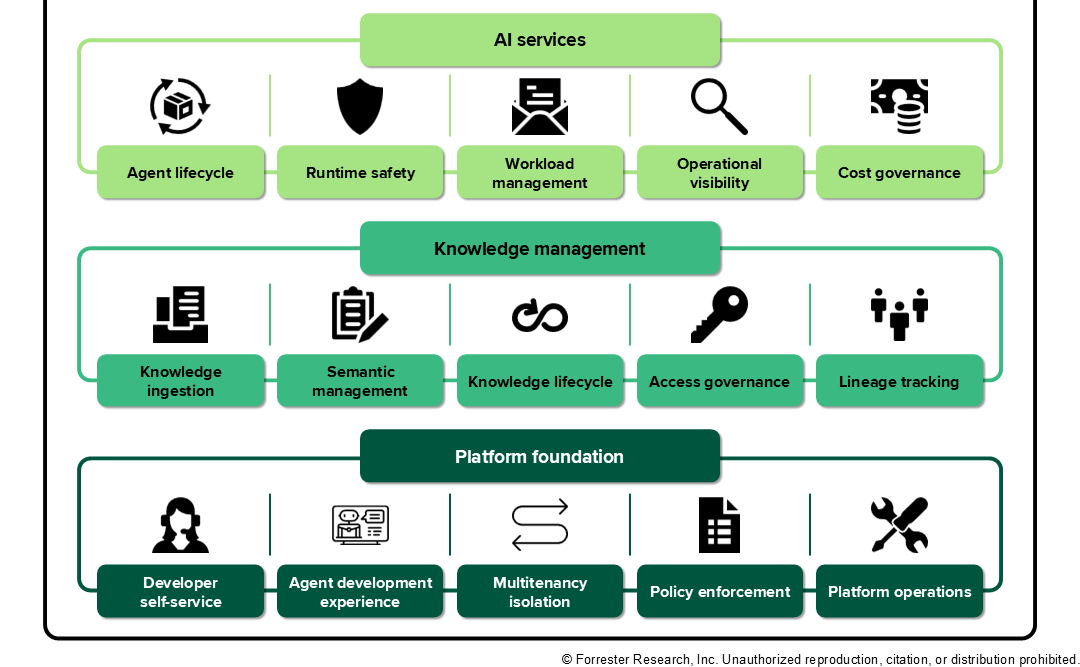
The most important takeaway is that neocloud and neoPaaS aren’t competing approaches; they address different layers of the same AI-native cloud architecture. Neocloud provides the AI-optimized execution environment; neoPaaS provides the governed platform for building, deploying, and operating AI-native applications and agents. Together, they help enterprises balance performance, cost, governance, sovereignty, and developer productivity as agentic AI adoption accelerates.
The AI-native cloud is no longer a future vision — it’s rapidly taking shape through these two emerging categories. Technology leaders evaluating their cloud strategies should now consider not only which cloud to use but also which neocloud and neoPaaS capabilities are required to support AI at scale.
If you’d like strategic guidance to assess neocloud and neoPaaS capabilities and redesign cloud strategies for enterprise AI, please book an inquiry with me and Lee Sustar.
Related Forrester Content