Summit Attendees Get A GTM Readiness Reality Check
Go-to-market strategy. We knew it was a hot topic, but when practitioners showed up an hour early to “squeeze in” to an already full workshop, it underscored just how urgent GTM transformation feels right now. At Forrester’s B2B Summit in Phoenix, more than 50 attendees rolled up their sleeves to turn that urgency into clarity.
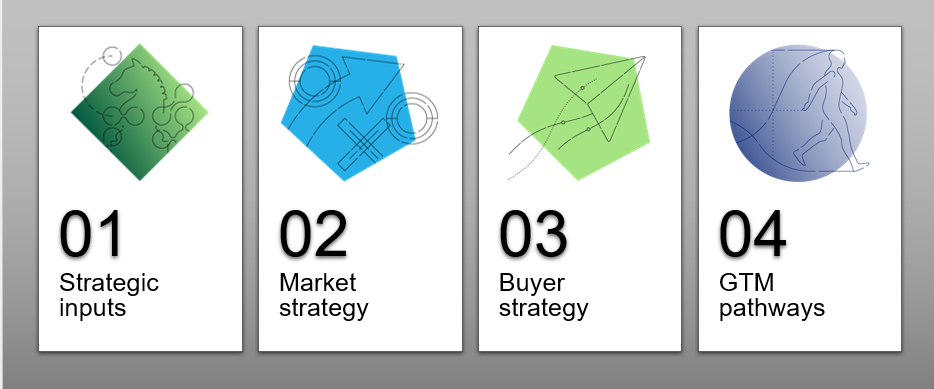
The goal of our Assess Your GTM Transformation Readiness workshop was straightforward: Help B2B leaders measure their current GTM strategy capabilities. Participants completed assessment exercises across four core areas: strategic inputs, market strategy, buyer strategy, and GTM pathways.
They self-plotted scores on visual “heat maps” while having meaningful peer discussions about what the results mean in practice. We had some fun along the way (including handing out “Dumpster Fire Response Team” pins), but the conversations were the real value. Here are a few takeaways:
Strategic Inputs
Although every organization operates differently, several common strategic inputs shape GTM decisions: the scope of the effort, growth strategies, revenue targets and business objectives, and market segments and buyers to consider.
- Foundations exist, but there are still struggles. Strategic inputs set the boundaries and intent of the GTM strategy, and it’s where organizations often struggle. Our client engagements consistently reveal the challenge. And the workshop results further echoed that reality: Most attendees clustered in the low-to-mid ranges, with only two reaching the highest score range.
- Leaders admit strategic inputs are a work in progress. Many organizations are still working through the fundamentals required to make wise GTM strategy decisions. Challenges often appear in product-first cultures and complex cross-functional environments. When leaders don’t define GTM scope or specific growth and revenue expectations, investment priorities fall apart.
Market Strategy
Revenue leaders use market strategy to guide decisions on which segments to prioritize based on the greatest growth potential as well as the most cost-effective approaches to reach the market.
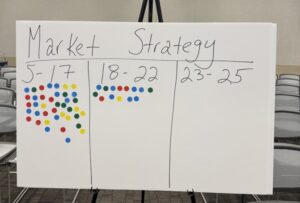
- Little is done with segmentation. Market strategy identifies viable segments using evidence-based methods that blend internal and external insights. Participants indicated they’ve done segmentation work yet little with it thereafter. Heat-map placements skewed toward the lower ranges, with no one at the top.
- Segment prioritization is a challenge. The sticking point is making the tough calls on which segments to prioritize. This often appears as a debate about market attractiveness versus ability to win — or the absence of a repeatable, evidence-based prioritization process. But work to prioritize — and deprioritize — segments remains.
Buyer Strategy
The buyer strategy component defines core audience needs, maps offerings to those needs, and identifies the buying group responsible for the purchase decision.
- Few have shifted to an audience-focused GTM approach. Buyer strategy requires detailing core audience needs to determine the most relevant offerings. Workshop results showed that most leaders struggle here. Participants acknowledged difficulty shifting to an audience-focused approach, with most plotting in the lower range and only one reaching the highest maturity level.
- Buyer understanding remains a gap. When audience needs aren’t clear, organizations default to product-first GTM efforts. Downstream, that often creates scattered execution, such as targeting the same audience with multiple products and messages that don’t resonate. The room highlighted a core truth: GTM execution accelerates when it’s explicitly tied to prioritized segments, offerings, and buyers.
GTM Pathways
A GTM pathway is a visual representation of the decisions agreed upon by the GTM leadership team. It depicts the prioritized market segments, audience needs, offerings, and buyer personas.
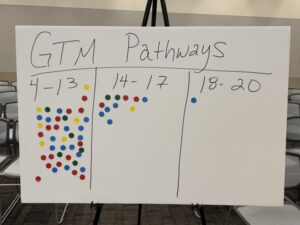
- Some decisions do not show up in execution. GTM pathways capture decisions about prioritized segments, offerings, and buyers — providing operational clarity for revenue teams. Here, attendees overwhelmingly plotted in the lowest range, with only a single participant scoring at the highest maturity level.
- Leaders must provide clarity through core GTM artifacts. This is where strategy most commonly falls apart. Many B2B leaders make decisions but don’t codify them in a consumable way for sales, marketing, product, and customer success. The assessment highlights the need to develop pathways, which are the core artifacts revenue teams need to effectively plan and execute.
Summary
Across the room in Phoenix, the signal was clear: B2B leaders know they need a fresh approach to GTM strategy. The session surfaced an interesting reality that even mature companies struggle with GTM maturity. Fortunately, these are fixable gaps. Attendees left with a baseline and a sharper view of where targeted improvements can unlock results.
If you’re a B2B leader and a Forrester client, you can evaluate your own readiness with Forrester’s Go-To-Market Strategy Maturity Assessment. And if you want to accelerate the work, consider scheduling a GTM strategy workshop. B2B Summit may be over, but the GTM transformation conversations are not! Connect with Katie Fabiszak and Rick Bradberry to keep the dialogue going.
Categories