Schneider Electric Announces Intention To Acquire Cognite
A long (long, long) time ago, I worked for a company building a semantic web platform. Graphs, ontologies, and standards governing well-managed data seemed like a promising and achievable future, until the financial crash sucked money and attention out of the space, and suddenly, they didn’t. Pure and theoretically robust, many of these technologies were — frankly — hell to get working at scale. Fast-forward a couple of decades (or more), and many of those ideas are reentering mainstream conversations in the asset-intensive industries like manufacturing where I now focus my attention.
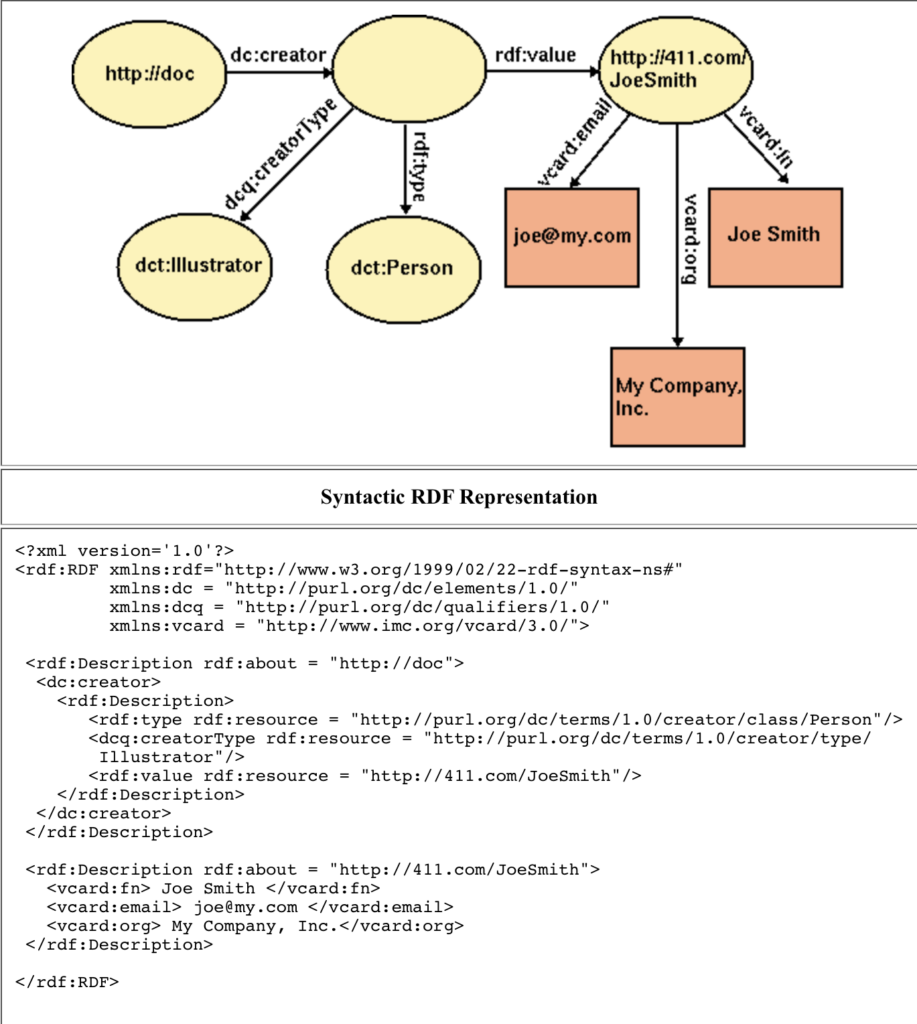
Image source: An early attempt to think about graphs, before the formal standards were fully developed, by Eric Miller (no relation), Dan Brickley, and me.
AI Needs Good Data, And Good Data Gets A Helping Hand From A Good Graph
German industrial conglomerate Siemens acquired Altair back in 2024, and lurking behind all the simulation froth attached to that acquisition were Cambridge Semantics, graphs, ontologies, and all that jazz. Siemens announced Intelligence Center X in June, and Siemens Digital Industries Software’s leaders have been sharing more about it at Siemens Realize LIVE in Amsterdam this week. Low-code platform Mendix (which Siemens acquired back in 2018) takes top billing in the announcement, but a graph database (from Altair’s RapidMiner/Cambridge Semantics stable) now called Graph Studio may ultimately prove more transformative.
At AVEVA World in Milan back in May, industrial software company AVEVA’s CEO, Caspar Herzberg, announced the intention to launch “a digital twin builder and an industrial knowledge graph” for its digital industrial platform, Connect. And then this week, AVEVA parent Schneider Electric announced its intention to spend around $3.1 billion acquiring Cognite, dashing my plans to write a blog about IFS CEO Mark Moffat popping up on the AVEVA keynote stage in Milan and the Siemens keynote stage in Amsterdam to announce intriguing partnerships between his firm and both of these competitors: That one will have to wait! At the core of Cognite’s increasingly AI-friendly software stack sits Cognite Data Fusion and, at its heart, a knowledge graph.
AVEVA (and Schneider), Cognite, and Siemens are far from alone in exploring graphs. It’s just intriguing that I’ve sat in rooms having extended conversations with executives from all of them about this precise topic in just the last few weeks. Google had big graph ambitions back around 2010 when the company acquired well-funded startups like Metaweb. AWS made fresh knowledge graph announcements in New York last month, and the graph is gaining prominence in Kognitwin as it and the industrial software company formerly known as Kongsberg Digital morph to become Falkor (company and product).
Before everyone in IT and banking and healthcare and fashion rushes to brief me on their amazing new graph thingummy, I should stress that I don’t formally cover knowledge graphs and related technologies for Forrester. Analyst colleagues including Boris Evelson, Indranil Bandyopadhyay, and Charlie Betz do that far better than I could. I was just bemused by this intersection between my past and present lives.
Still, if you’re using (or thinking about using) a knowledge graph in the asset-intensive industries Forrester does pay me to think about, I’d love to chat. What are you doing (or trying to do), what works, and what doesn’t? What, if anything, do these maneuverings by some of the sector’s big beasts mean for you and your plans? If you have your own perspectives to share, please schedule a briefing and tell me all about them. If you’re a Forrester client and want to discuss (or challenge) my thinking on these topics, schedule an inquiry or guidance session.
Related Forrester Content