TeamViewer Connect: A Pragmatic Look At How IT Can Level Up DEX
TeamViewer Connect in New York City brought together TeamViewer leadership, customers, and digital employee experience (DEX) practitioners for a grounded discussion about what it really takes to “level up” DEX.
- Rather than focusing on product features, the event centered on operational maturity, outcome-based measurement, and the human impact of automation. From customer stories to practical roadmaps for DEX management maturity, a clear theme emerged: Autonomous DEX is achievable — but only when organizations pair ambition with realistic execution.
- The event was intentionally small and conversational — a mix of TeamViewer leadership, customers, prospective customers, and DEX thought leaders. That format created space for candid discussion about the pressures IT organizations are under today: rising employee expectations, constrained budgets, growing technical complexity, and increasing scrutiny around the business value of IT investments.
- I had the opportunity not only to attend but also to speak, sharing a perspective on the state of the digital workplace through the lens of employee friction and the operational challenges IT teams face as they try to improve experience at scale. That framing — experience first, operations second, technology third — showed up repeatedly throughout the day.

Keys To DEX Success
Here are five key themes from TeamViewer’s event that are need-to-know for DEX success — no matter where you are on your DEX journey:
1. Autonomous DEX Is The Destination — Not The Starting Point
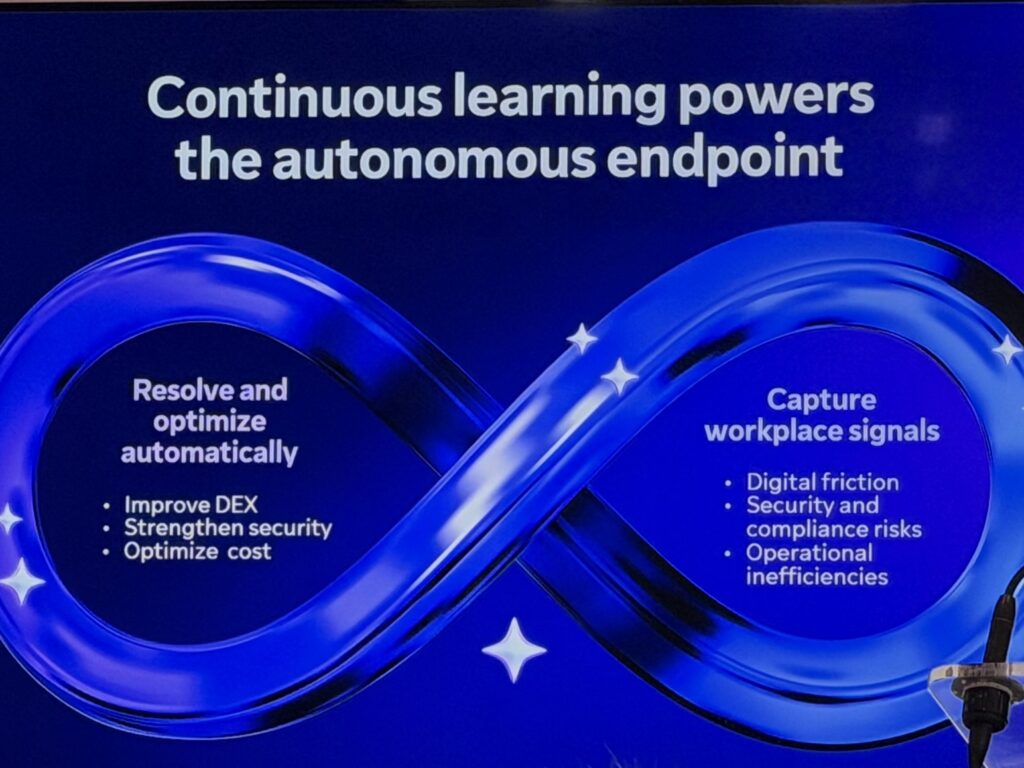
One of the strongest themes was the idea of autonomous DEX improvement at scale as a North Star and the recognition that most organizations are still on the journey toward it.
TeamViewer’s messaging consistently emphasized that autonomy isn’t about eliminating humans from IT operations. Instead, it’s about building learning systems that help teams shift left, move from reactive to proactive remediation, and standardize what already works. The discussion around the TeamViewer Intelligence Agent illustrated this approach: using insights from real support sessions to ground recommendations in an organization’s actual history, then giving teams the option to convert resolved issues into repeatable automations.
The key takeaway wasn’t the technology itself but the operating model behind it: Capture institutional knowledge, reduce recurring issues, and scale proven fixes without losing governance.
2. Why IT Metrics Must Change
A standout session was a customer panel that focused less on tooling and more on measurement and outcomes. A recurring message was the need to move away from traditional IT operational metrics, like ticket volume, toward experience measures that align with business objectives.
One moment that resonated strongly was when an IT leader from a major insurance company emphasized the importance of identifying internal stakeholders — inside and outside of IT — and partnering early and often. That statement captured a reality many DEX initiatives struggle with: Experience optimization is inherently cross-functional, and progress stalls without shared ownership.
3. Automation Can Create Capacity — And Opportunity
In a breakout conversation, an end-user services IT leader from a large international insurance group shared how improved experience visibility from TeamViewer with ServiceNow integration had allowed his team to support additional lines of business without adding headcount. What stood out most, however, was his leadership perspective: As automation frees up capacity, his goal is not to reduce staff but to reinvest that capacity into upskilling — enabling team members to move into more advanced infrastructure and architecture roles.
In a market where AI is often framed as a threat to jobs, this was a useful reminder that leadership intent matters as much as technology capability.
4. Maturity Still Matters
The event also reinforced that autonomous operations require foundational discipline. A session from Andrew Hewitt, VP of strategic technology at TeamViewer, outlined a phased DEX management maturity roadmap — from stabilizing and standardizing through automation and optimization and ultimately to predictive and preventive practices — and reflected a realistic understanding of where most organizations are today.
This maturity-based framing acknowledged a hard truth: Skipping steps in the name of speed often creates fragility, not progress. Organizations that succeed will be those that operationalize DEX incrementally while keeping the long-term vision in sight.
5. XLAs As A Complement, Not A Replacement
Continuing the focus on outcomes, a session on experience-level agreements (XLAs) by Martin Versteeg, chief experience officer of the XLA Institute, emphasized that XLAs do not replace traditional SLAs but instead complement them. Practical guidance on starting small, using existing data, and focusing on one experience at a time aligned closely with Forrester’s DEXOps guidance.
High-scale, high-impact experiences like onboarding or time-to-shift-start productivity are my go-to recommendations as strong candidates to begin with for organizations looking to take their first steps toward experience-based measurement.
What “Leveling Up DEX” Really Means
Stepping back, TeamViewer Connect was less about announcing what’s new and more about reinforcing the why behind continuous DEX optimization. The agenda choices and customer stories reflected an understanding that technology alone doesn’t deliver experience outcomes. ROI is amplified only when people, process, and technology move together.
For IT leaders, the message was clear: Leveling up DEX isn’t about chasing the next feature. It’s about building the operational maturity, measurement discipline, and partnerships required to make experience improvement sustainable.
What To Do Next
- Identify one high-impact employee experience and operationalize it end to end.
- Shift at least one recurring issue from reactive support into standardized remediation.
- Revisit your DEX metrics and ensure that they connect directly to business outcomes.
If you’re interested in learning more about Forrester’s DEXOps model, how to apply it, and how to scale continuous DEX optimization, reach out on LinkedIn, or if you’re a Forrester client, you can set up an inquiry or guidance session.
Related Forrester Content